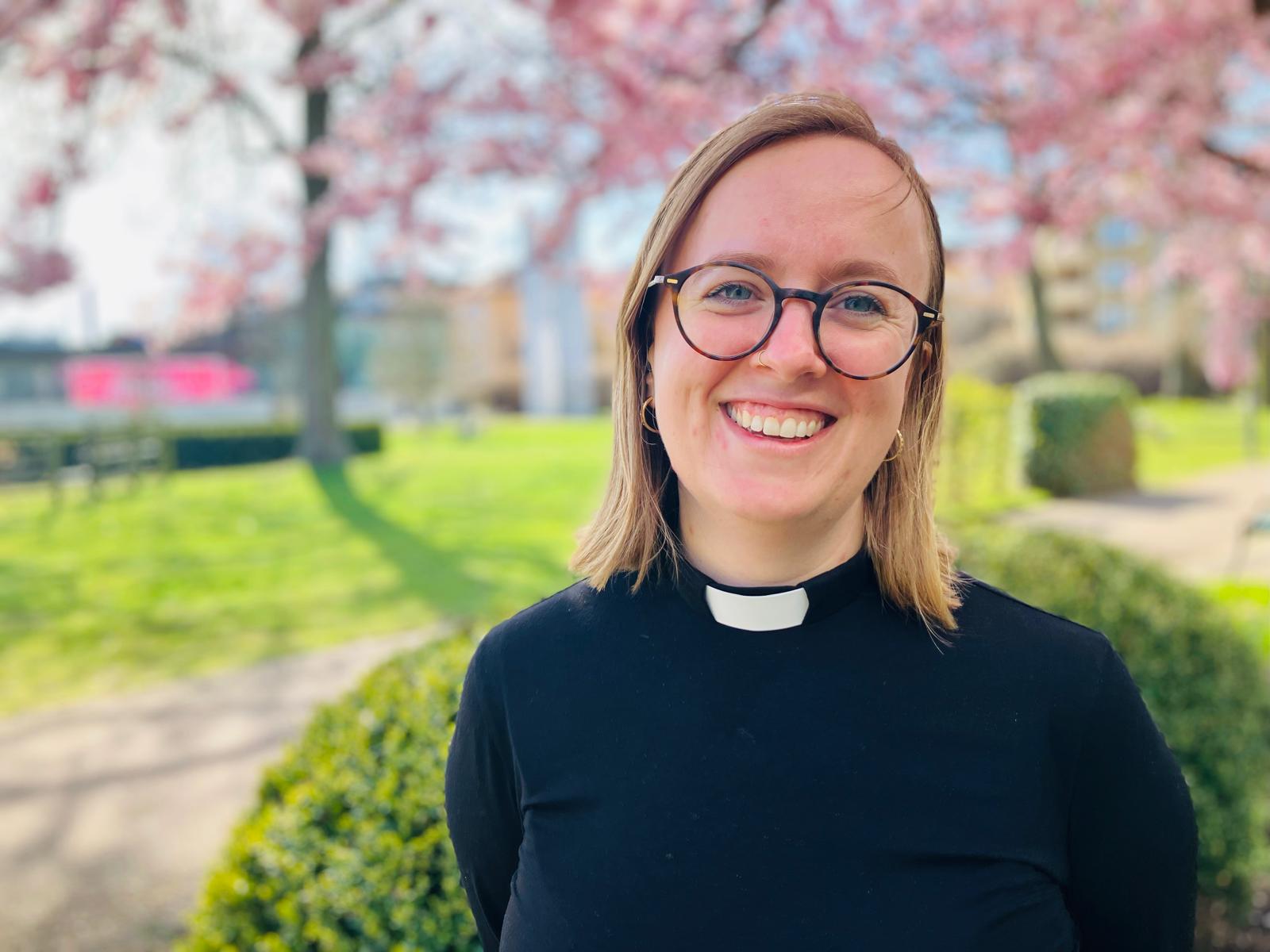
A Conversation with Pastor Emma Jansson
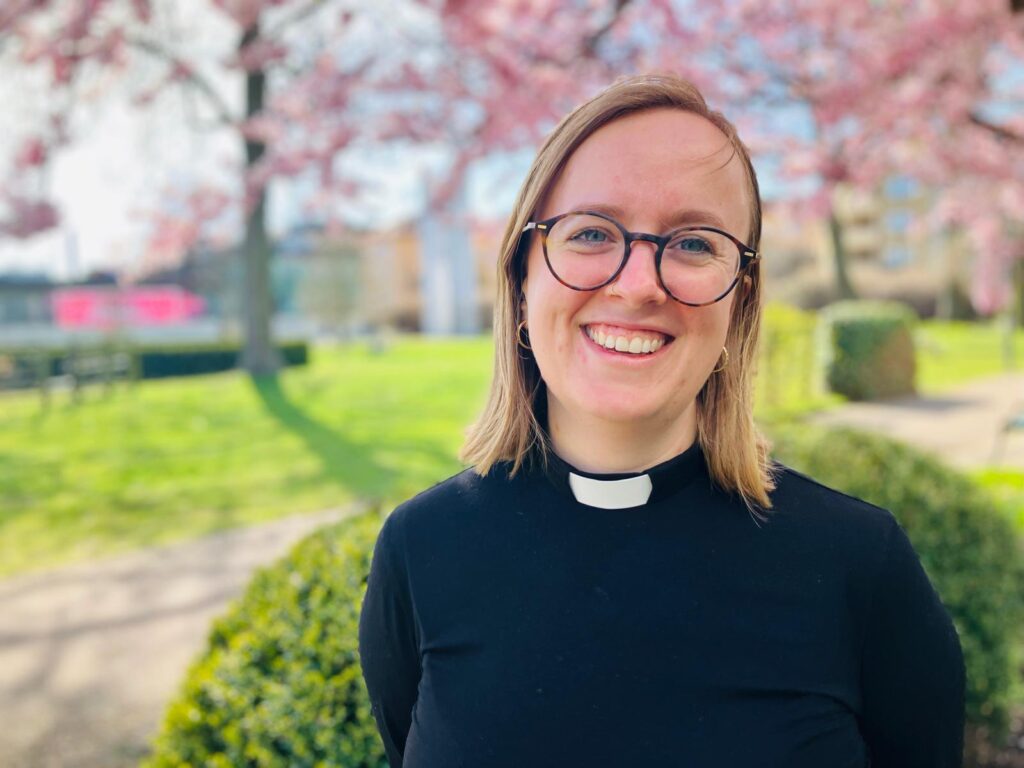
The conversation with Pastor Emma Jansson took place in November 2025 at a weekend conference organized in Malmö by Forum för prästvigda kvinnor. Emma is one of the conference organizers and a board member. She serves in the Saint Matthew Congregation in Malmö, Sweden, and is actively involved in ecumenical work. She studied at the Ecumenical Institute of the World Council of Churches in Bossey (Switzerland).
The Forum is an organization that brings together women pastors in the Church of Sweden. At present it has about 100 members. It serves as a place to share experience, to learn from one another, and to promote various initiatives. Its main event is the annual conference, and in 2025 it took place in Uppsala. Several participants from Latvia were also invited to take part.
This April the annual conference will take place in Uppsala, and LLSTA board member Aļesja Lavrinoviča will also participate; during the meeting she will conclude a special agreement of friendship and mutual support between the Swedish forum of women pastors and LLSTA.
.
Emma, can we begin with your personal story? How did you come to the church and later — to ministry?
Emma Jansson: I joined the church at the age of 14, after both of my grandparents died within the space of one year. At that time I had many existential questions, and a neighbor who was a pastor encouraged me to join the confirmation classes. I was baptized in a lake at the age of 14 and got involved in ministry as a youth leader. I first felt the call to become a pastor at the age of 18. Then, in 2013, I began to study theology in Uppsala and was finally ordained in June 2020.
How do you see your place in ministry today?
Emma: I serve in a very active congregation with people who genuinely seek God. I believe that one must be brave and strong in order to find and take one’s place in the church. My experience in the ecumenical setting has shown me that the global church is often more active on questions of social justice and peace, and I try to bring these experiences and stories back to my own local, Swedish context.
How would you describe what the heart of the Gospel is?
Emma: The heart of it is that we are loved by God. It is a simple but profound truth — God sees us and hears us. We are loved already before birth, throughout our whole life, and also after death. The Apostle Paul writes that nothing can separate us from the love of God in Jesus Christ. That is at the foundation of everything: all that we are as human beings is in some way contained in God.
It is very important to listen to other, wider voices of the world and then to absorb and take in what we have heard into our own lives. We must also think about people whom we may never meet, because our life and way of life “here” affect them “there.” We must see our part of the world as a whole.
Jesus’ ministry was directed toward the wounded and the outcast in society — they are at the center of Christ’s attention. If we forget the fragile and the unseen, we forget Jesus’ ministry; we forget the Gospel.
You have had the opportunity to serve in three different congregations. What is the best part of your work?
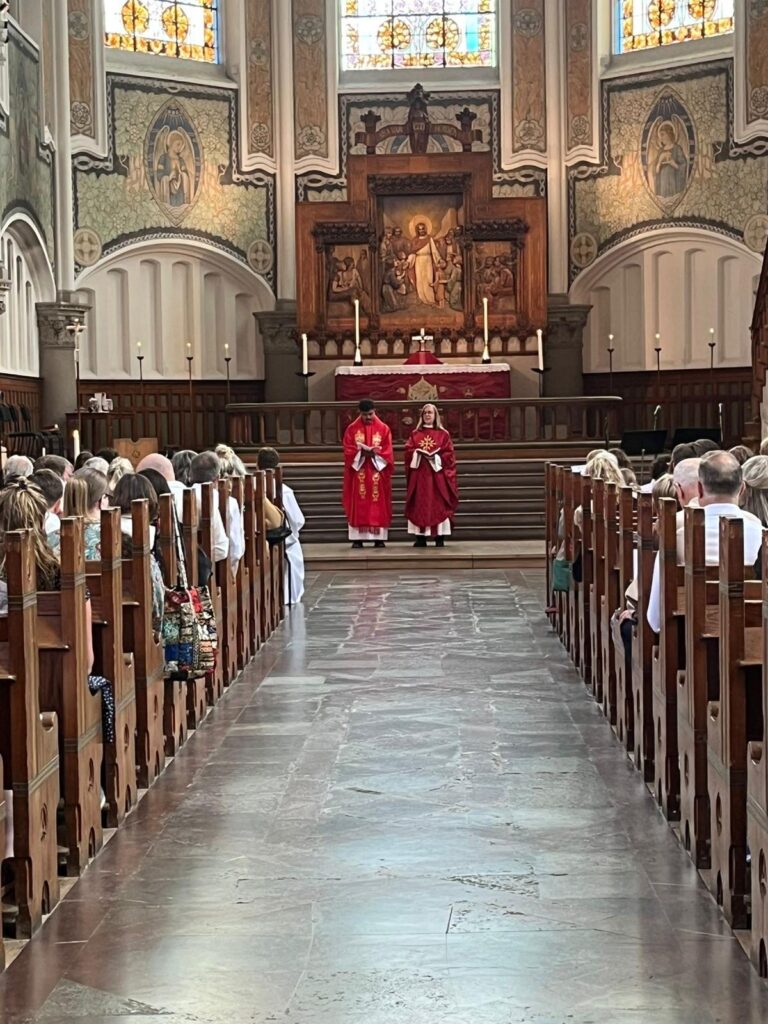
Emma: It is the people and the Sunday services. There is something radical and beautiful in the Eucharist — people of different ages and life experiences come together to share in one bread and one cup of wine. When we share in the Eucharist, I see Christ in people’s eyes. When they come to receive the bread and wine, you can perceive how people are being shaped into the likeness of Christ — the presence of Christ is revealed in them.
What is also very important to me is that this calling is open and accessible to all. We come together, receive and partake of the elements, and we are all equal. It is so radical! In it the world we long to see is revealed — one that is nowhere near being fulfilled yet.
The service can bring peace, taking away anxiety and unrest. There is a peace that comes through the love of friends and through people who listen to one another and help in works of love and kindness; that too is the best part.
How has ecumenism shaped your ministry, and what is “receptive ecumenism”?
Emma: Receptive ecumenism means learning from other traditions, rather than merely trying to teach others. It allows us to understand that, although we share a common center in Christ, diversity is also a beauty. Engaging in relationships with what is different often strengthens one’s own identity as well, because no one has to give up themselves in order to be part of the fellowship. In Malmö this also includes interfaith projects between Christians and Muslims, which here are a significant part of everyday life.
I think that most people who engage in ecumenical work discover that their identity grows stronger when they encounter a different point of view. There is no need to fear losing one’s identity — ecumenism means that at the center are Jesus Christ and our faith, not that we all have to be the same. We can also disagree with one another, and that is perfectly acceptable. There are not many places where one of the foundations is that we can disagree on some questions while at the same time there is much we can agree on.
What inspires your sermons and your ministry?
Emma: Inspiration comes from trust — from the fact that the stories and lives of the people in my congregation are entrusted to me. I also find new life in the weekly Sunday service, remembering that my work is done together with God and is sustained by God’s love. Usually I read the Scripture texts on Monday, so that they are with me all week. Yet a sermon is not really “finished” until it is spoken in the context of the service. Usually I write it down, but I am increasingly becoming freer and more ready to say what the Holy Spirit prompts me to say in the given moment.
Finally — are there any writers or thinkers who have especially influenced your theology?
Emma: I have been strongly influenced by Henri Nouwen’s book The Return of the Prodigal Son, especially the way the author describes God’s love. At the moment, together with colleagues, I am reading the book The Afternoon of Christianity by the theologian and priest Tomáš Halík, and from what I have read recently I would like to mention the book The Way of Love by the American Episcopal bishop Mariann Budde, which speaks about very real, genuine spiritual practices for everyday life.
Conversation and transcription: Arta Skuja