Life can begin anew
Ezek 37:1-14 I Psalm 130 I Rom 8:6-11 I John 11:1-45
Pastor, Provost emerita Ieva Graufelde
.
There are people who come into your life
Quietly like spring rain
And remain there like the sun,
That warms even on the coldest days.
A friend is the one
Who understands without words,
Who stays when others leave,
And believes in you more than you do yourself.
.
Today the Gospel text leads us to Bethany, a small town a few kilometers from Jerusalem, where Lazarus lived with his sisters — Martha and Mary.
Mary was the one who “had anointed the Lord with fragrant oils and dried his feet with her hair.” Martha is known for her hospitality, her service. And all three of them — for their friendship with Jesus.
The Gospel of John allows us to glimpse something deeply human: Jesus did not live alone. He was not without the closeness of friends, but was together with those who strengthened him and called him to remain faithful to his calling. Jesus had friends, and Lazarus, Martha, and Mary were among the people closest to him. The house in Bethany was a place where Jesus could return, where he was awaited, welcomed, and understood. When, on Palm Sunday, Jesus set out for Jerusalem, he began his journey precisely from Bethany. And before his betrayal and arrest, he returned there once again to rest for a few days. Although resistance to Jesus’ word was growing and he experienced rejection, Jesus had what all of us need in times of tension and trial — faithful friends.
But then something happens that shakes the house of Jesus’ friends. Lazarus dies. When several days have already passed, Jesus arrives and finds the grieving sisters. Martha and Mary are so broken that there is almost a clash of words. In one breath they say: “Lord, if You had been here, my brother would not have died.” And in the very same breath they affirm: “Whatever You ask of God, God will give You.” This is exactly how faith often sounds. It contains both reproach and hope at once.
Martha says: “I know that he will rise again in the resurrection on the last day.” And Jesus answers her with one of the most powerful sentences in all the Gospels: “I am the resurrection and the life. Whoever believes in me will live, even though he dies. And everyone who lives and believes in me will never die. Do you believe this?”
Martha replies with a simple but profound confession: “Yes, Lord. I believe that You are the Christ, the Son of God, who is coming into the world.”
In a friendship that is open and faithful, there is no need for pretense. There a person is allowed to be true. That is why Jesus can reveal his true nature to Martha. And where truth is spoken in love, there resurrection also becomes possible.
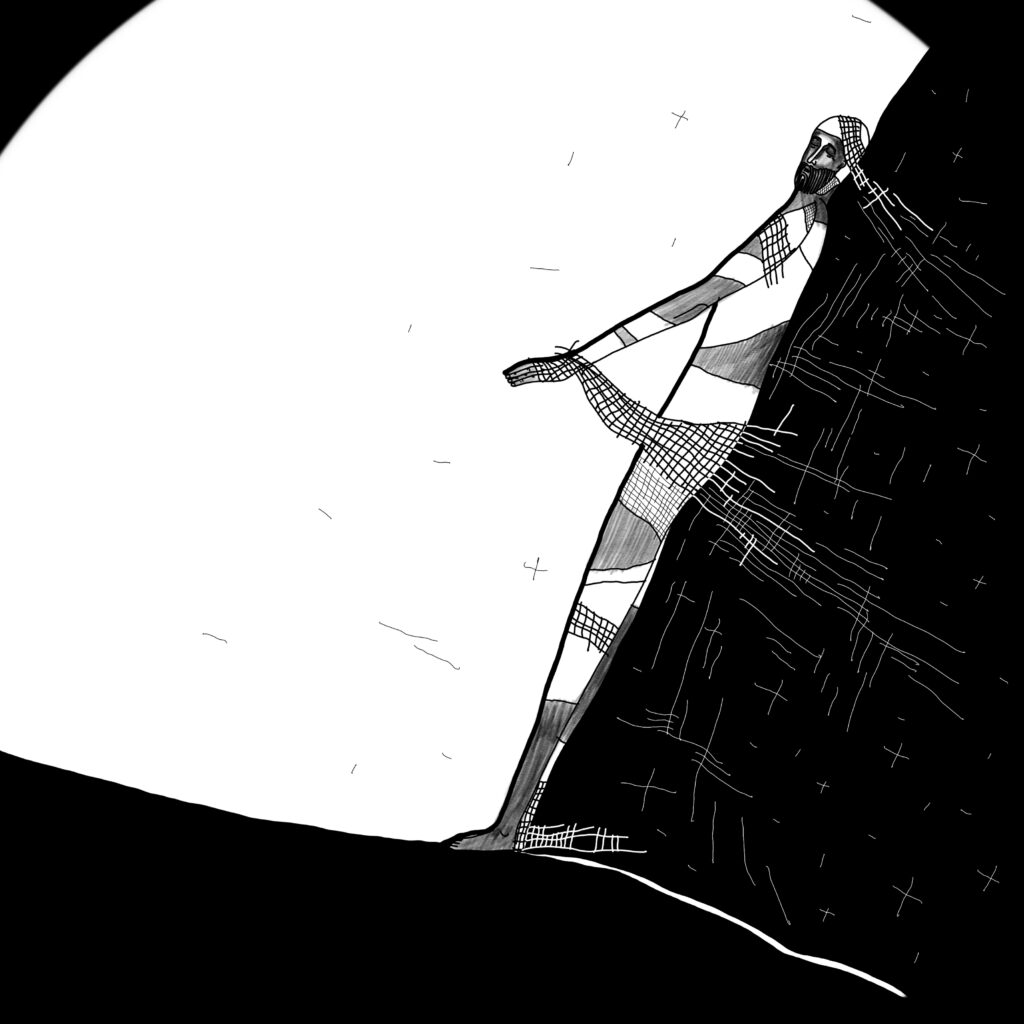
For the first and only time in the New Testament, a deep moment is revealed to us: Jesus weeps. Jesus weeps — not because he is powerless, but because death has broken into the world God created. Because in the hearts of people there is fear, pain, and unbelief. Jesus weeps together with them. Yet he does not weep over Lazarus, for Jesus knows what he will do. Compassion does not cancel his purpose, and tears do not diminish his authority. Jesus goes to the tomb. And there he calls out in a mighty voice: “Lazarus, come out!” And when Lazarus comes out, Jesus says to the people: “Unbind him and let him go!”
This story is not only about a single miracle in Bethany. It is also our story, for in every person’s life there are tombs. There are losses, there are disappointments, and there are hopes that collapse. Sometimes dreams die. Sometimes habits that no longer serve us. Sometimes idols to which we have clung. And sometimes relationships too.
Without death there is no rebirth. If the old is not let go, new life cannot begin. Jesus does not always protect us from every death. But he stands at the tomb and calls us to life.
Saint Ambrose wrote that human friendship is one of the expressions of God’s friendship.
“Because God is true,” he said, “friends can be true. And because God offers friendship, we can be friends to one another.” Saint Augustine considered community to be the foundation of growth. “The more friends I have,” he wrote, “the more we can together love wisdom.” And Saint Benedict held that revealing oneself to another person is an essential step on the way to full human maturity.
Perhaps it is precisely the friends we gain who most accurately reveal the depth of our soul. True friends are those who love us so deeply that they trust our path, even if they do not yet fully understand its meaning. They surround us with safety and hope. They help and believe in the possibility of life even when it becomes uncertain and full of unexpected turns. In such fellowship a space is created in which we can reflect on life anew and ask: What does life ask of me? What does justice ask? What does courage ask?
And perhaps it is precisely in this space of questions that we are able to hear that voice which once resounded in Bethany. The voice that calls not only Lazarus, but us as well. Christ’s cry at the tomb is not merely a miracle of the past — it is God’s word to every human life. And so today, as the path of Lent draws near to its close and Holy Week is very near, we can listen to that same voice. Christ stands also at the borders of our lives — at our fears, at our losses.
And he still calls: “Come out!”
Come out of fear.
Come out of despair.
Come out of everything that would keep you locked in the power of death.
And then Jesus speaks words to the community around us: “Unbind him and let him go.”
For Christ gives not only life. He also gives freedom. And where the voice of Jesus is heard, there, even at the tomb, life begins anew.
.
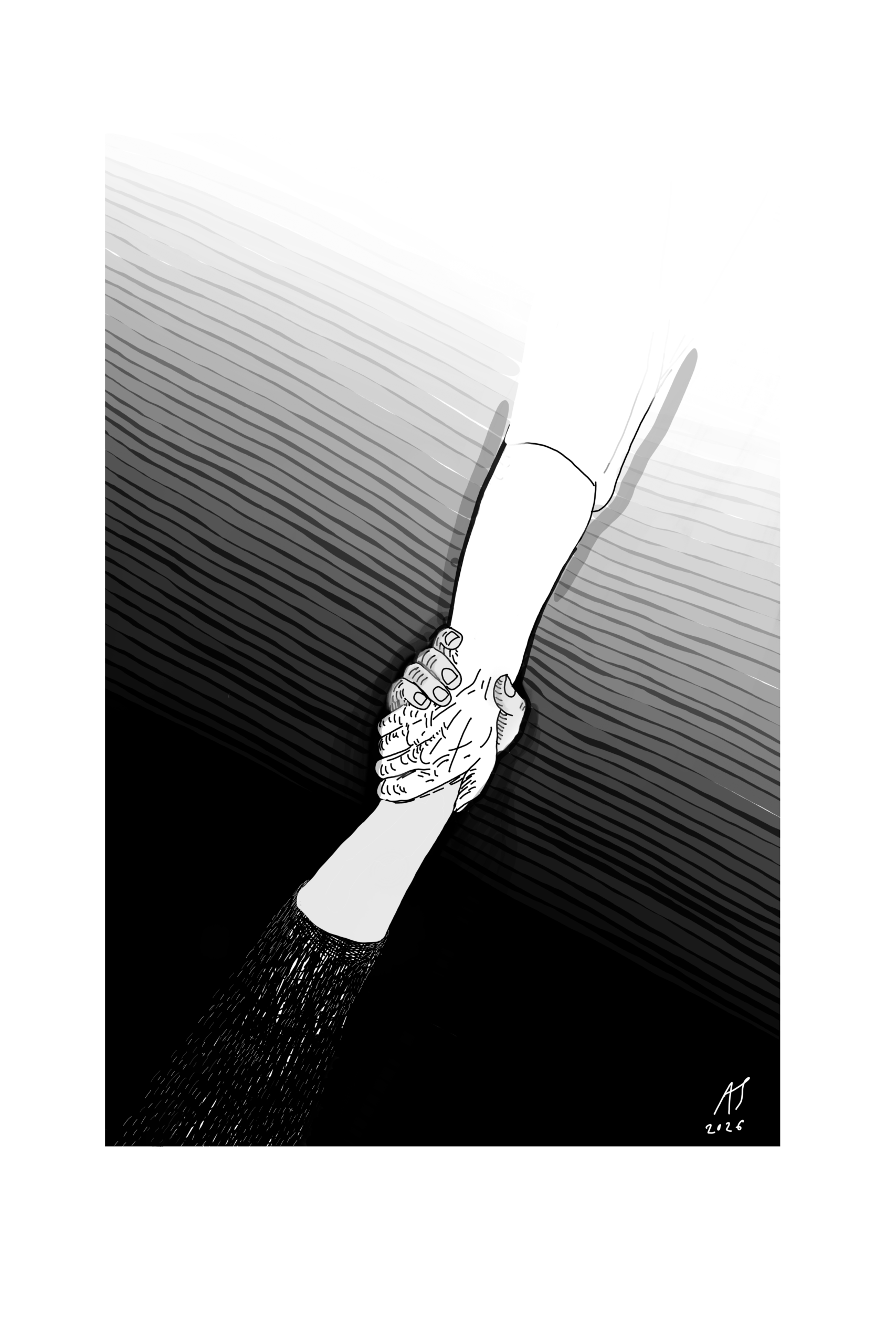
Illustrations: The Return of Lazarus I, II. Arta Skuja, 2026