

Meet, participate, and invest in the Lutheran Reformation
Geneva, 23.10.2014.
The general secretary of the Lutheran World Federation, Rev. Martin Junge, invites the churches of the Lutheran communion “to join, meet, participate, and invest” in a three-year process of LWF global and local initiatives to mark the 500th anniversary of the Reformation in 2017.
In this year’s Reformation Day letter to all LWF member churches, Junge invites the churches to reflect together on the motto chosen for the LWF commemoration, “Liberated by God’s Grace”, which will also be the motto of the LWF’s 12th Assembly, to be held in May 2017 in Windhoek, Namibia.
The LWF Council decided that the LWF will focus its processes and events relating to the Reformation commemoration over three years – from 2015 to 2017. Within the framework of the commemoration motto and sub-themes, various initiatives will take place to express the global character of the Lutheran Reformation and to keep the churches moving in ongoing processes of reform.
The events will also affirm the LWF’s ecumenical responsibility, so that the celebration of 500 years does not disrupt what has grown over decades of ecumenical relations, but rather builds further on these foundations.
Churches can join all the events listed in the booklet “2017 – 500 Years of Reformation”.
Among them are processes that celebrate women’s leadership in the Reformation, which continues to this day, that mark the contribution of young “reformers” to the celebrations, and the Lutheran hermeneutics of reading Scripture.
The booklet also includes a map showing the turning points of the global Reformation since its beginning in 1517. Junge calls on churches to use the logo of the 500th anniversary celebration, together with its explanation:
The LWF 12th Assembly and the “Reformation 2017”, or “Logo 2017”, focus thematically on the current journey of the LWF communion: “Liberated by God’s Grace”.
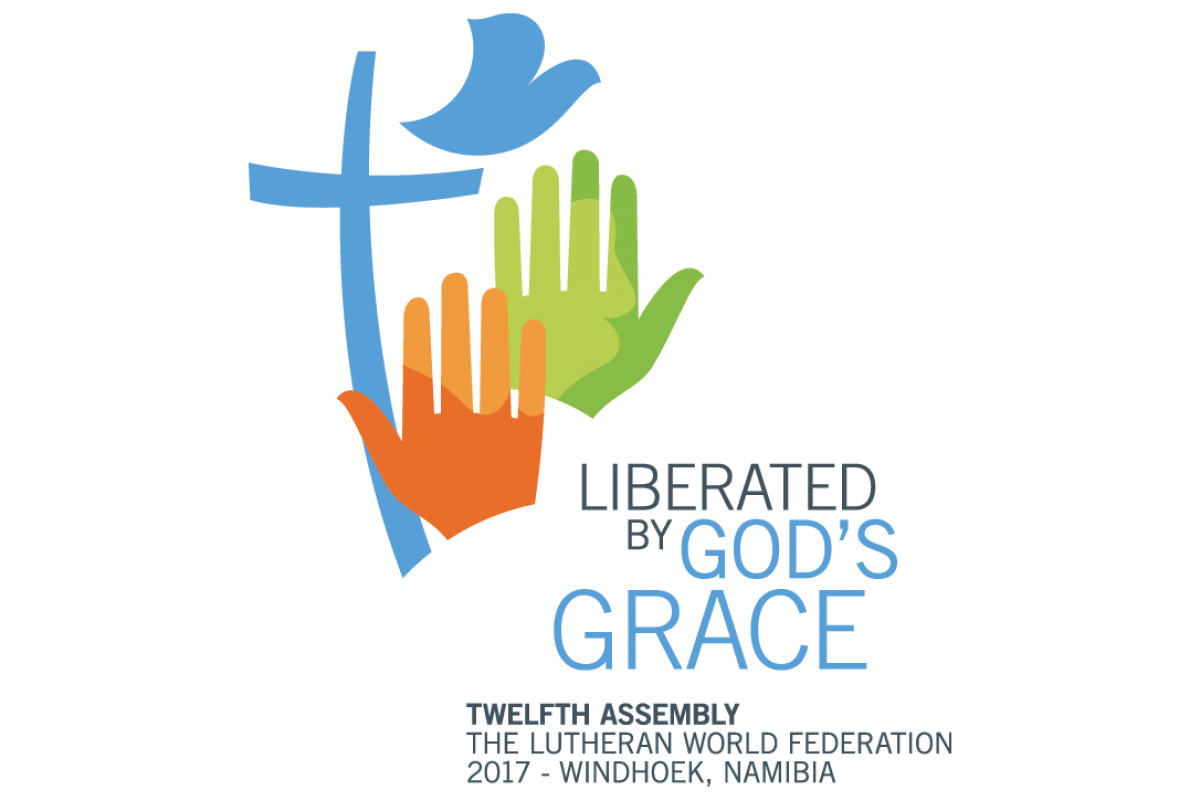
The logo’s emblem connects visually with both the logo of the previous assembly and the LWF’s visual identity. The logo has a version for both the anniversary of the Reformation and the 2017 assembly, each with its corresponding text.
Logo elements and colours
Colours:
The logo takes over the LWF’s global colour scheme in the Namibian context, with the blue/orange/green colours reflecting the blue/red/green colours of the Namibian flag.
The colours of Namibia symbolize the sea (blue), which flows into the dunes and the desert (orange). The orange/red colour also symbolizes the people of Namibia standing together.
The green colour expresses grassy expanses and agricultural resources.
Among the symbols is the white colour, which in the Namibian flag expresses peace and unity.
The blue and green come from the global logo of the Lutheran World Federation, where blue is the colour of eternal hope. It is also the colour of water, where the Christian faith is offered to us from God’s grace through baptism.
The green colour points to life, growth, renewal, and our compassion and care for creation – we are liberated by God’s grace in order to serve.
The cross:
We are saved by grace through faith. Our faith in the crucified Christ is the core of our identity. This is expressed by the cross in “Logo 2017”.
The cross element was used in the logos of previous assemblies. Its design in “Logo 2017” deliberately recalls the logos of previous assemblies, to show that the anniversary of the Reformation and the 2017 assembly are rooted in the history of the LWF.
The Luther rose:
The Luther rose is present, affirming our confessional roots and confirming everything we do, but is not dominant in this logo. This reflects our wish for the 2017 celebrations to be ecumenically responsible.
The dove:
The dove expresses God’s covenant and the Holy Spirit, who is given to us in God’s grace and who leads us on the path of faith.
The hands:
The hands reach upward; they are free hands, liberated to serve God and one’s neighbour. They depict movement – we are a communion not only after the Reformation, but also in the process of reforming.
The report was prepared based on information provided by the LWF http://www.lutheranworld.org
Translated from English by LELBāL pastor Ieva Puriņa
Proofreader Mag. Theol. Milda Klampe