To see one’s reflection in the waters of the well
Exodus 17:1-7 I Psalm 95 I Romans 5:1-11 I John 4:5-42
Pastor Aija Graham
.
Once, in days long ago, a lion lived in a certain desert. In the middle of the desert there was a small, shallow pond, the only place where the animals could drink water. But, since great, fierce winds and storms often raged in this desert, the water in this little pond was very murky; no reflection could be seen in it, and moreover the water was muddy and undrinkable. So the lion set off to look for another source of water, and, having walked a long way, he came to another pond, in which there was the coolest, cleanest, clearest, most peaceful water he had ever seen.
The lion bent his head to drink from this water, but suddenly in the clear water he saw a reflection and was frightened. He thought there was another lion before him! A large, powerful lion threatening him. Seeing this image, the lion fled. But still, his great thirst made him return to the clear pond’s water. And again, before him, the image of another lion. The lion opens his maw, shows his sharp fangs, and lets out a great, thundering roar to scare off this other lion coming from the water. But that lion too opens its maw to roar back. This was too dreadful and frightening. And again the lion flees from this pond, but again the thirst for water leads him back to the clear waters. And the more often he returned to the clear water, the braver the lion became. Until one day the lion allowed himself to plunge his whole muzzle into the clear water, and this other, second lion, of which he had been afraid, completely disappeared…
How often we are afraid to see our true reflection in the waters of life. Either we cannot believe in the good that we see, do not allow ourselves to see the brightness within us, and therefore observe the reflection with very judgmental, harsh eyes, without love. Or else we delight in our reflection like Narcissus, unable to reflect honestly, and do everything so that no one sees from the outside what is really happening within us. Showing everyone only the outer part, hiding the inner world behind masks and a kind of pretense.
They do say that a mirror, a reflection, does not lie. But those eyes that observe the mirror’s image and those voices we hear about the image are often not ours at all; they are other people’s voices, other people’s standards, other people’s expectations, other people’s opinions. Either too much self-admiration and an unreal way of seeing oneself, or a literal self-destruction while looking at the image.
And this is exactly how it is in the text with the Samaritan woman.
In the very middle of the day, in the hottest hour of the day, in the heat, a Samaritan woman walks along the road. She is heading to the well. To her pond in the middle of the desert, to drink. As every day. She carries to the well her empty jug, to fill it, and, as she fills the jug, she sees her reflection in the well. Her heart is heavy as she sees it. She looks at herself and her life heavily, with condemnation; in her resound other people’s voices, reproaches, sidelong glances. And surely, if she looked into the well and saw her reflection there, then she thought: “I am a sinner, I have made so many mistakes, I do not know how to love, I am unlovable, I am good for nothing, I am unaccepted.”
But behold, on one day out of many others – Jesus is at the well. God’s great, accepting love is at this well. And this love makes the woman look at herself differently. To see and feel her reflection differently.
Crossing the religious and social stereotypes, Jesus asks her for water. In Jesus’ eyes she has value. He sees this woman with different eyes. In Jesus’ eyes she is beautiful. In Jesus’ eyes she is worthy of love. In Jesus’ eyes everything is forgiven her. From the hands and the vessel of this Samaritan woman, which other Jews in their prejudices would not touch, Jesus wishes to drink. He tears down every wall of enmity, the divisions – good, bad, mine, foreign, belonging, different, woman, man, the one pure from sin and the sinner, my religion – another religion. But above all – he tells the woman to draw from the well once more and to look at her reflection with eyes full of forgiveness and love. He tells her to look into the reflection of her life, all that has been and is there, without fear and condemnation.
It turns out, Jesus knows the woman’s whole life story. He sees it without blaming, shaming, punishing, casting out. Or, in other words, Jesus said to the Samaritan woman this: “Do not be afraid, I know what you are going through. You bind yourself to your past. It is your endless empty jug or heavily full burden. But I offer you to look at the reflection of your life differently – with acceptance.”
This now is the moment when the woman leaves at the well the vessel she habitually carried with her, and goes to her village to proclaim about Jesus. Similarly, elsewhere in the Scriptures we can read that a person whom God has touched and addressed leaves their fishing nets or the tax collector’s writing tablets, in order to give themselves fully to Christ and to the regained freedom of heart. When a person is able to look into their life without fear, they leave the old, addiction-fostering things that have tied them to the past, in order to follow Jesus free, unbound, and liberated. For it turns out – in God’s love my reflection has changed. And the woman’s life story changes. She becomes an evangelist – she proclaims that she has met the Savior – someone who accepted her as she is. She becomes an evangelist – in her reflection in the well she sees a person loved by God. Not loved by five or six men and gossiped about by other people. A person loved by God she sees in her reflection!
The well symbolizes our heart. And the well’s water is the mirror of the heart. And if you honestly look into your heart, what is your reflection like? How do you look at yourself and your life? Do fears of life, fears of others, fears of yourself prevent you from seeing yourself as loved, accepted, needed by God? It is so important that Jesus be at your heart, at your well. For he changes the eyes with which we look at ourselves and at everything that happens around us and in our lives. More deeply, more honestly, more truly, more gently, with greater grace. Perhaps sometimes also more clearly, because the murky waters did not allow us to see the true image, our real self.
Just like that lion from the fairy tale, when he finally bravely placed his whole muzzle in the clear pond water, he lost his fear of his own reflection. In essence, the lion became free; he was not afraid to see his inner strength. He merged with it. In the same way a person, in the waters of their well, their heart, in the nearness of Christ, must come to see their true reflection and essence. It changes life.
.
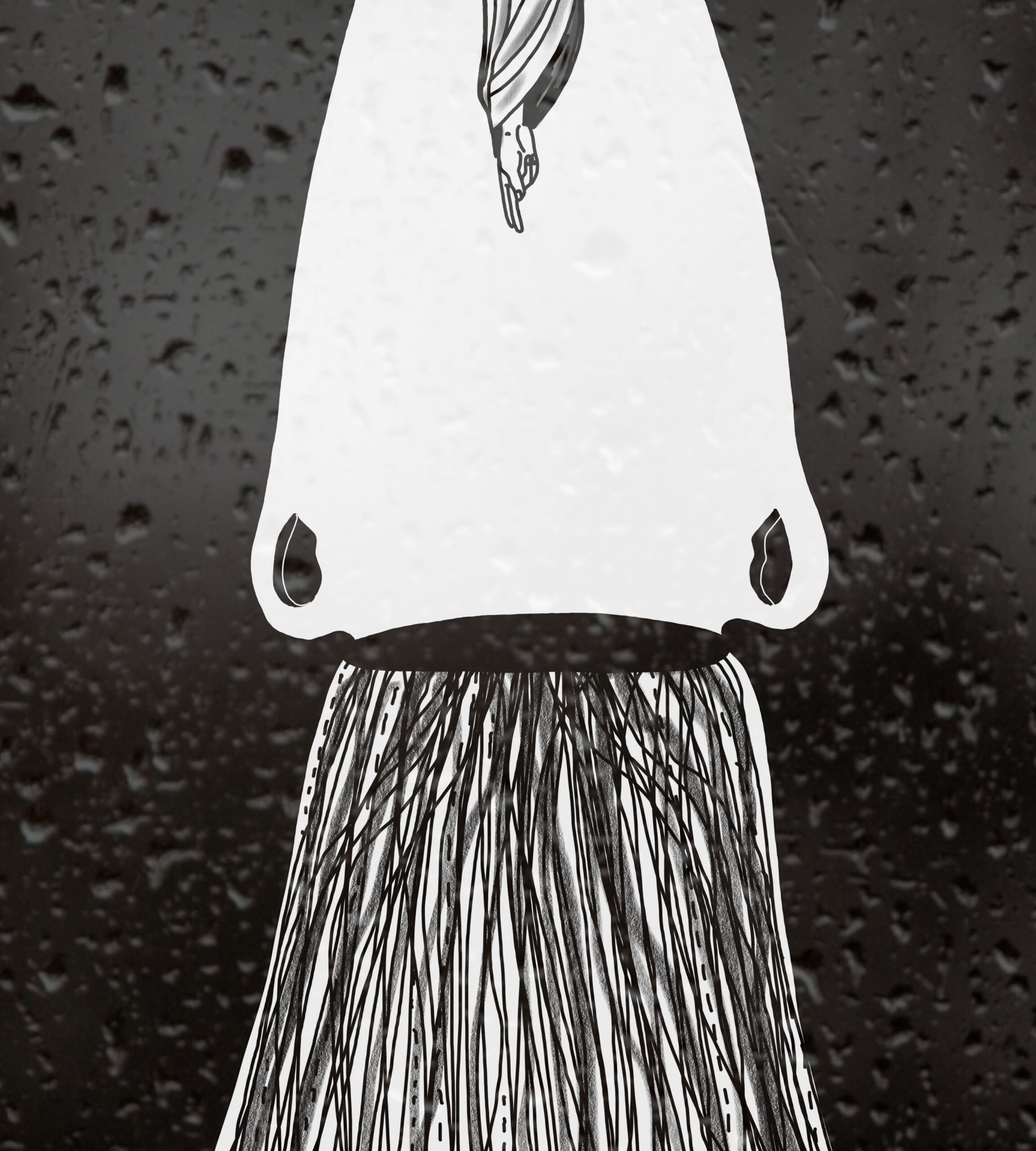
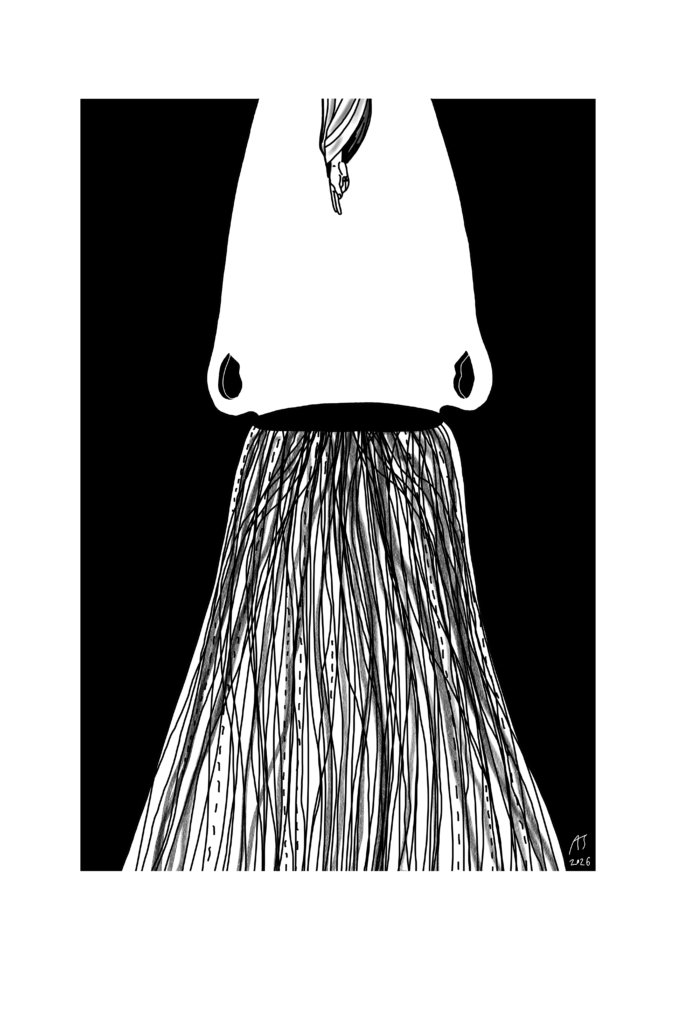
Illustration: Living water. Arta Skuja, 2026