The blind will see, and we will lack nothing
1Sam 16:1-13 | Psalm 23 | Ephesians 5:8-14 | John 9:1-41
theologian Līga Puriņa
In Lent we often ask ourselves the same questions with which all our life projects begin: what to improve, what to give up, what to add? Living in a cultural environment that for centuries has been preoccupied with “right conduct,” even the Holy Scriptures easily turn into a set of instructions.
When Paul says: “live as children of light” (Eph. 5:8), we almost automatically understand it as a list of tasks. One must try to help those in misfortune, one must be friendly, one must be inclusive. In the context of Latvian Lutheran women, the focus might be on the active struggle for women’s rights in the church. In other communities it may mean: holding the reins tighter, guarding and supervising.
Thus, imperceptibly, the warm light becomes a cold floodlight that we shine to examine ourselves and to examine others.
But, in my view, this is not the content of these texts. In my view, there is something more significant here, which I want to show you as well.
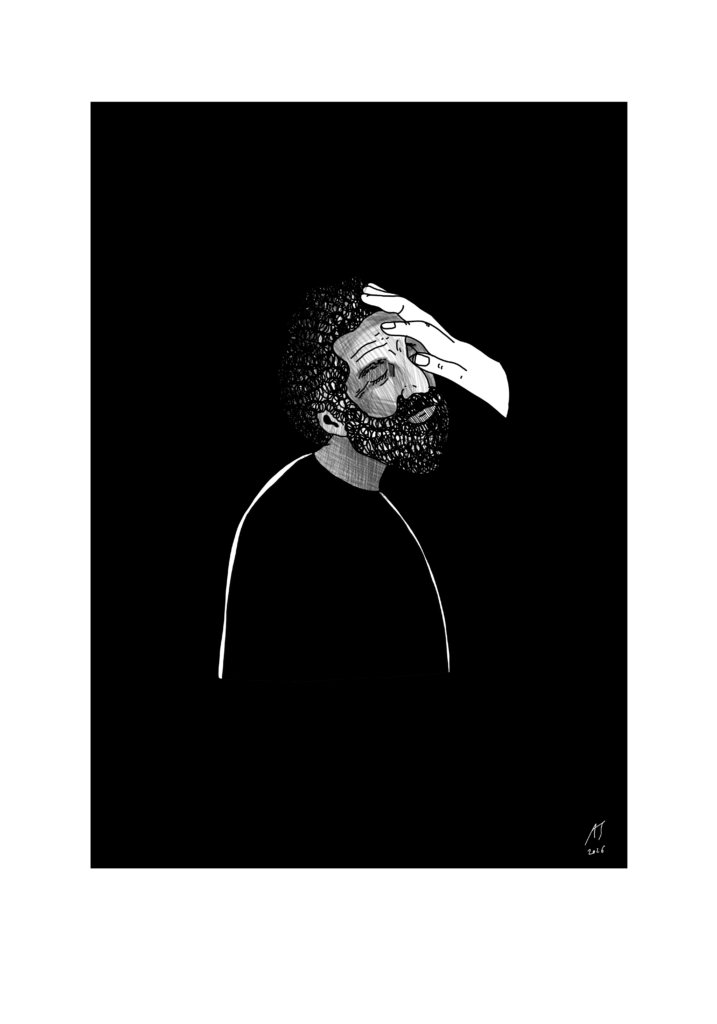
“While I am in the world, I am the light of the world.” Having said this, he spat on the ground, made a paste of mud from the saliva, and with it anointed the blind man’s eyes… (John 9:6)
John chapter 9 sets a strange scene before us. Jesus spits, makes a paste of mud, anoints the blind man’s eyes, and then – the blind man sees.
Does Jesus perform some inexplicable miracle, detached from the story? No. The Gospel of John here echoes the story of Creation. We see this, first of all, from how strikingly the text holds to the language of mud (adam – is mentioned four times in the text). Secondly, from the fact that the blind man is blind from birth. That is – from the beginning.
Just as in the creation story the human being is a paste of mud, so here too Jesus takes the same material and continues to shape it. Jesus continues the creation of Adam. Only this time, what Jesus “fashions” is that which Adam lacked – the ability to see. In other words, the one who was blind from the beginning is now sighted.
And Jesus said: “I have come into this world to render judgment – so that the blind would see and the sighted would become blind.” Some of the Pharisees who were there with him heard this and asked him: “Are we then also blind?” Jesus said to them: “If you were blind, you would have no sin, but you say: we see. And your sin remains.” (John 9:39-41)
The next thing we must note is the conversation with the Pharisees. The Pharisees are serious, educated, and influential interpreters of the Scriptures. If there is anyone in this tradition who “sees” and is able to explain the Holy Scriptures, it is the Pharisees. And it is precisely to them that Jesus says the harsh phrase: “your sin remains.”
How can sin remain with those who see? How can the one who does everything by the highest standards and with the best intentions sin?
And yet – they can. For “to see” does not mean simply to know what is right.
“If you were blind…” means: if you were aware that you were born just as blind as this man; if you were aware that God’s creation must continue in you, then you would have no sin! But instead you are self-satisfied; you make a system out of faith; you say: “we see.” Therefore the sin remains.
“You were once darkness, but now you are light in the Lord; live as children of light.” (Eph 5:8)
Living only by instructions, we are unable to be light. With that we can be only like people with artificial lighting in their hands, with which to scrupulously examine others and ourselves – by the instructions. And while the floodlight shines in our hands, we ourselves stand in darkness. Unchanged.
Yet “the Lord looks at the heart.” (1 Sam 16:7)
That is why Paul says unwaveringly: you were once darkness, but now you are light. Not become, not shine the light, but – you are. Now you are. Changed by God. Raised from the dead. Alive.
You no longer need a list of the right tasks that must be completed. You do not need prescriptions. You do not need to do something for the sake of proving yourself or for the sake of a checkmark.
All that is needed: to let God continue the creation within us.
To live not by a list, but by essence.
The Lord is my shepherd, I shall lack nothing. He makes me lie down in green pastures, he leads me beside calm waters, he refreshes my soul, he guides me along the paths of righteousness for his name’s sake; even though I walk through the valley of death, I will fear no evil, for you are with me, your shepherd’s rod and staff give me safety. (Psalm 23:1-4)
Finally, in Psalm 23 we close the circle and can see what it is like when we live under God’s creation. What it is like when our blindness is healed. What it is like when we ourselves are light –
Then we lack nothing.
Having given ourselves over to God’s creation, we can give to others for real – that is, without even noticing it ourselves. We can love without pretending. And endure, without ourselves knowing how much. God anoints our head with oil, and our whole life is grace.
So then, may this Lent not be a project of enthusiasm, but God’s creation within us. May it be our homeward road in the house of the Lord forever.
.
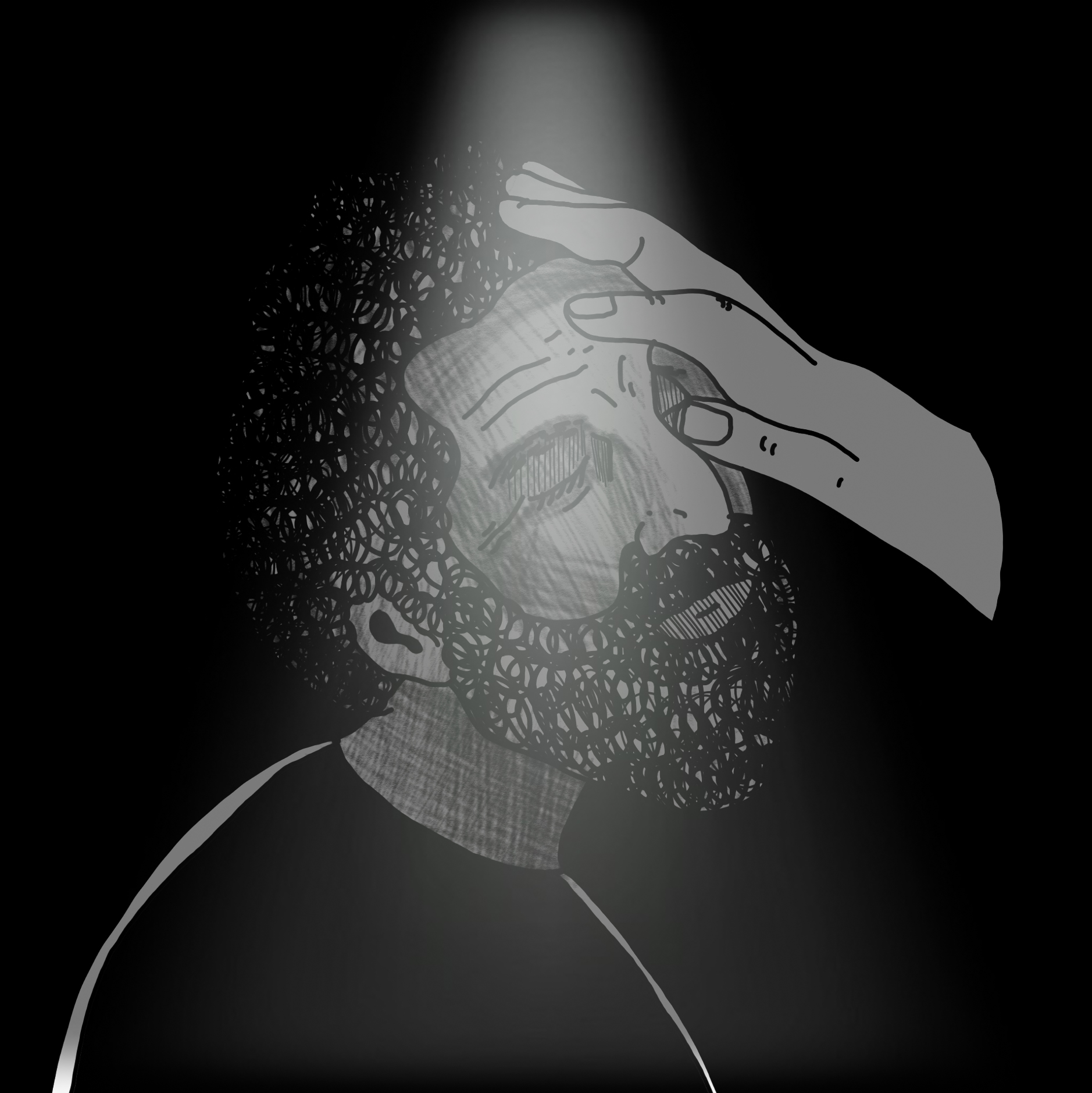
Illustration: The revealing of God’s works. Arta Skuja, 2026