
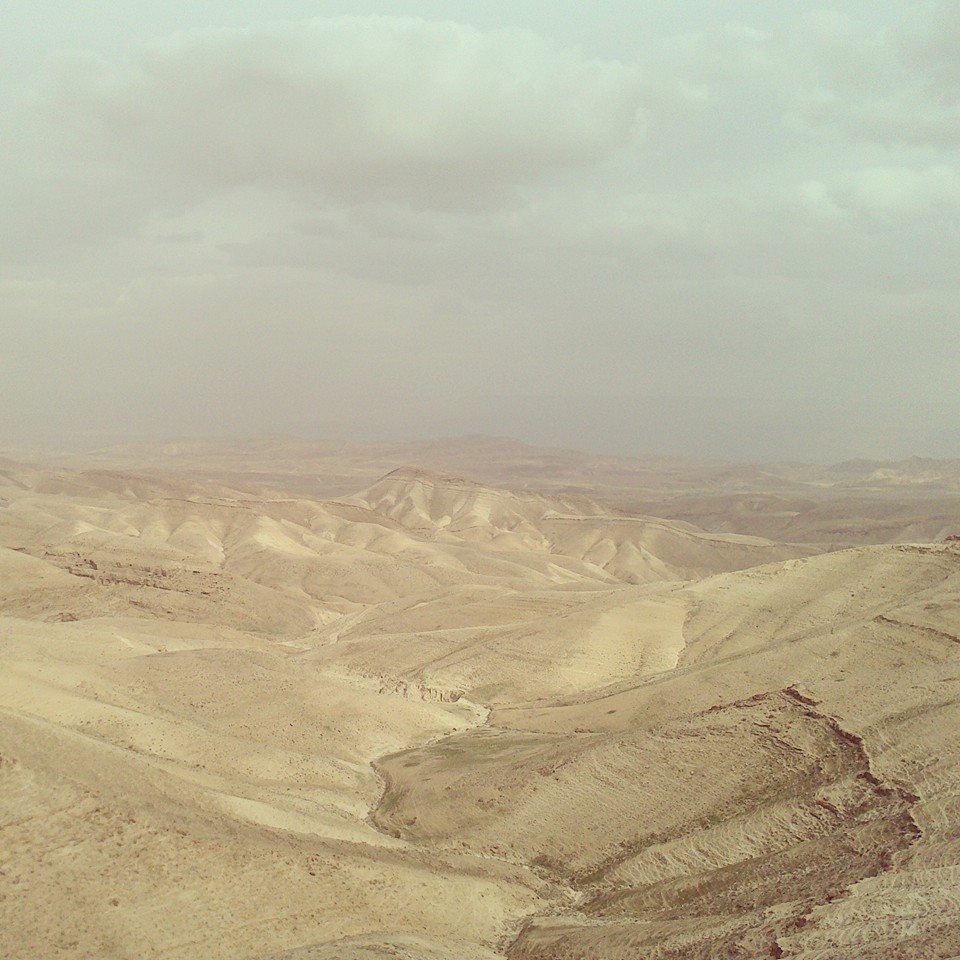
Maïté Eliat-Eliat is a Belgian psychologist with experience working with refugees and people who have lived through severe trauma. In this conversation she shares her life story, in which life in community and togetherness is central. The spirituality practiced by her family has always been oriented toward serving one’s neighbor, emphasizing simplicity and openness to the other, and it has also served as a guide in her life. Maïté talks about how we must learn to draw near to the other, especially “strangers”, and about what to do with fear and other emotions.
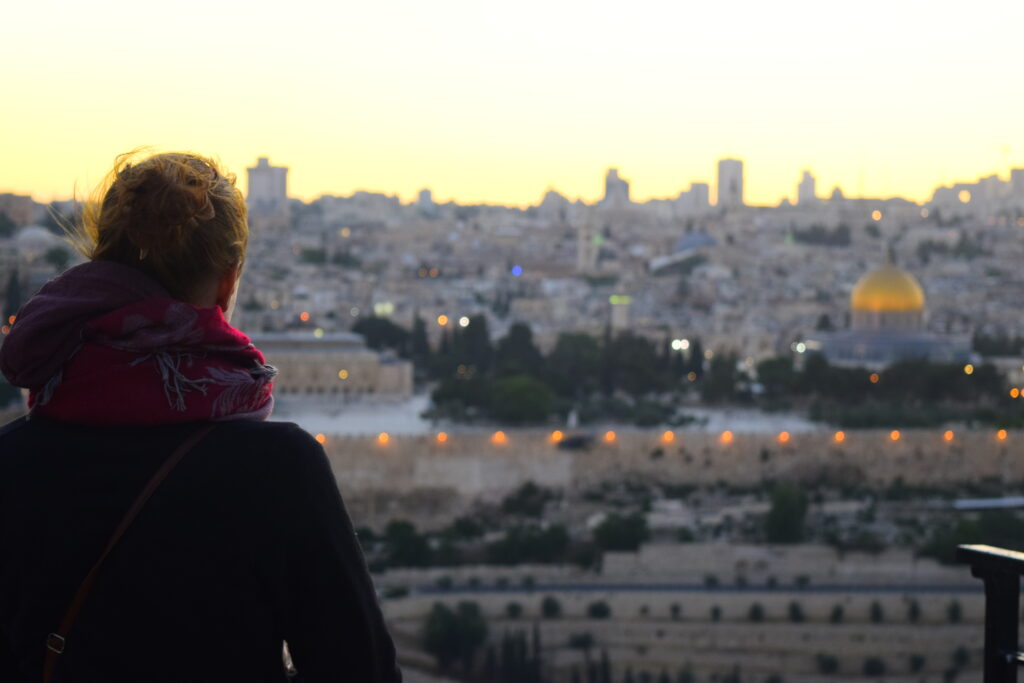
What is your first experience with religion and spiritual practices?
Maïté Eliat-Eliat: I grew up in a specific Christian community. My parents were one of the first families to join the newly founded community Colline de Penuel – the Hill of Penuel (Gen 32:31, the place where Jacob wrestles with God until he receives a blessing). It is located in Wallonia, Belgium.
The community’s source of inspiration is the concept of the desert (the hermitage) – a practice of the Eastern church, where a person goes for a time into silence and solitude, fasts and prays, in order to free themselves from everything superfluous and to hear God anew. In the Catholic tradition this practice entered through Catherine Doherty, who popularized it in North America. That is why the community’s intention was to build desert cabins on the land that belonged to it. Around them lived families who received guests, took care of the property, organized the guest calendar, listened to people who needed a conversation, and maintained the silence of this place.
The desert silence cabins were the core of the community – they gave people the opportunity to break away from the rush of the world and to be in prayer and reflection.
The community was founded in 1993, and I was only a year old when my family joined it, so I have no memories of life elsewhere. We lived there until I was 13. I remember how important it was to be quiet, especially near the desert cabins. We also had a chapel, and you could say that prayer and spirituality were a basic need. Every Thursday we celebrated Holy Mass.
So as a child you met various interesting people?
M.E.E: The international and multicultural aspect of my life comes from my parents. They met in Rwanda, where it all began. My father had gone there to teach at a seminary, while my mother worked as a nurse. They got to know each other, returned to Belgium to get married, and two years later went back to Rwanda already as a family.
That is also where my beginning is to be found. When the war started, my parents returned to Belgium, and soon after that I was born. The time spent in Rwanda was very significant for them for various reasons, and it deeply influenced both their lives and, later, mine as well. My parents developed a practice of communication in a nonviolent way of life and have written a book on this topic. My mother still leads seminars in various places, for various groups, on nonviolence, and they are both completely convinced of its importance.
When I was still very small, our family took in refugees from Rwanda. Several refugees always lived in our house, some from Congo as well.
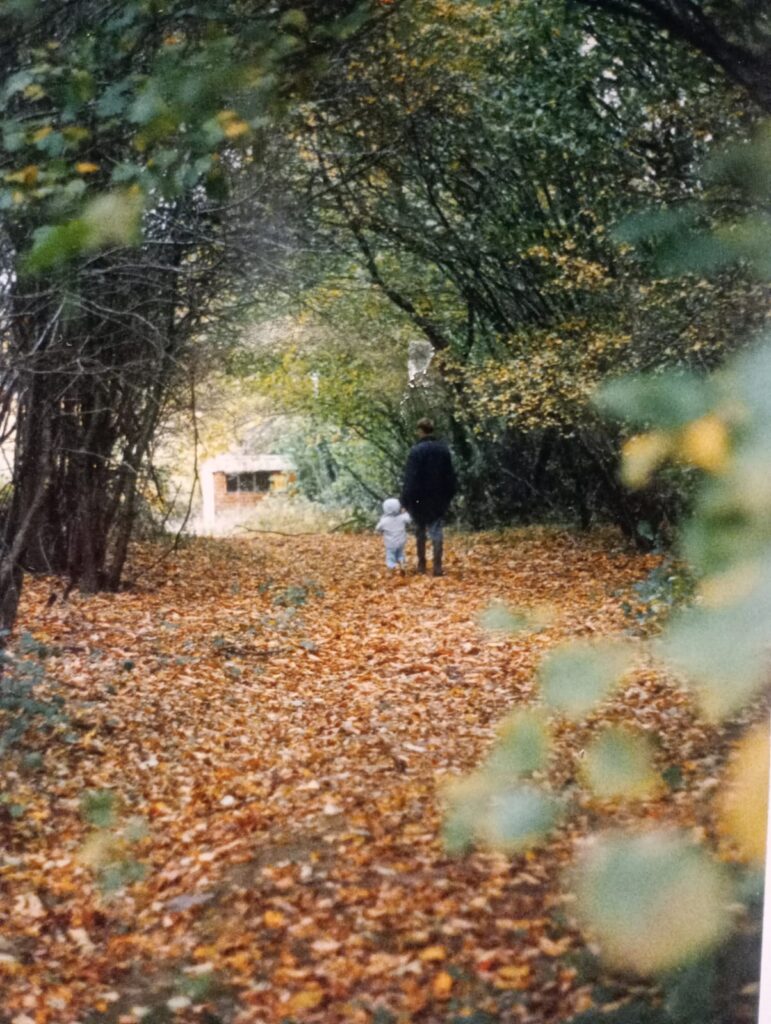
Refugees and various difficult life situations as the consequences of war – are these topics that you came to know already in early childhood?
Yes, that is so. When I was 13, we moved to Syria. Our parents’ motivation was to show us, the children, something different beyond the sheltered environment in which we had grown up. At first they considered the possibility of going to Africa, but realized that for the children the physical differences, such as skin color, would be too great a challenge for fitting in successfully, so they dropped this idea.
Our parents thought this question over and prayed about it for many years. We knew that one day it would happen, but it took time before they understood which country to go to, when my father’s sabbatical year would come.
When you left, could you already communicate in Arabic?
M.E.E: My parents attended language courses before leaving. Before the move, they went on a two-week journey, traveling all over Syria to find the most suitable place to live. They found a house only two hours before the flight back from Syria to Belgium.
We ended up in a small village, where the local priest said: “Look, this is the village community building, here we meet for various events, but please, come and live here with us. No payment is necessary.”
What did you do there?
M.E.E: We were homeschooled, except for one of my brothers, who studied at the local Arab school. In the mornings we had lessons, but in the afternoons I roamed around the village with a little group of friends, and in the evening I returned home.
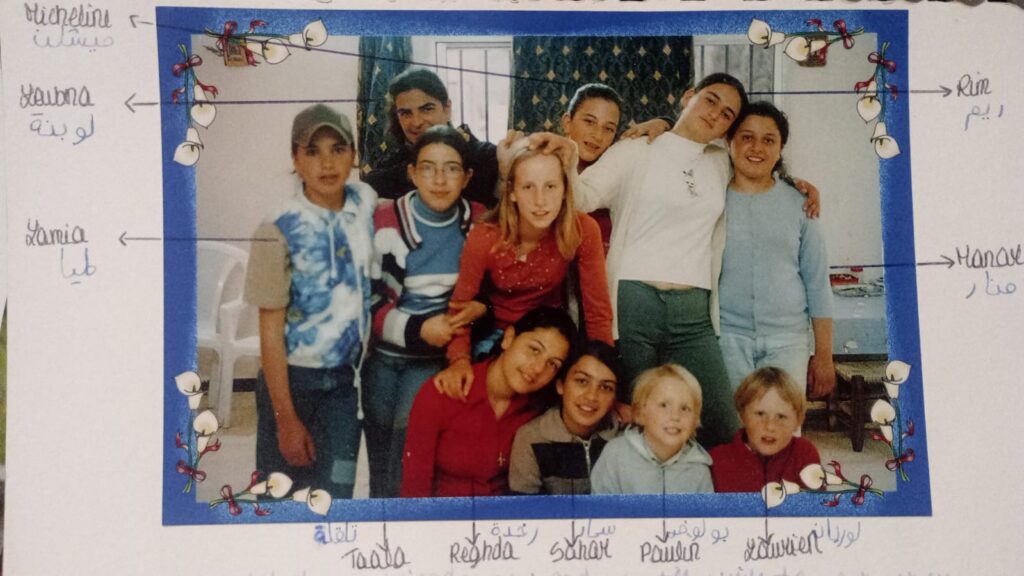
Did you also gain interreligious experience?
M.E.E: Not really. It was a Christian, Maronite-community village (the Maronites are Eastern-rite Catholics whose first communities formed in the 5th–7th centuries in Syria. In the liturgy they use Aramaic and Arabic). I observed how very structured and ordered their faith is – everything has to be in its place, everyone has to be able to fit into the common norms, and if someone does something wrong, then everyone is to some extent complicit.
So you can quite easily imagine how a “stoning” could take place in such a community?
M.E.E: Oh, yes! In this context – easily! Yes, and we were surrounded on all sides by Muslim villages. We tried to make friends in these villages, but our village priest, who was also a kind of village leader, did not like it. We had to keep these friendships secret. If they were discovered, we would have a hard time and, most likely, we would be cast out of the community. Yet, in spite of everything, we formed and maintained several friendships with Muslim families.
Was this experience, as a 13-year-old adolescent, decisive for your further path in life and your choices?
M.E.E: It was a very significant year for me. As an adolescent I could not fit into typical society. Among my friends I was the only one with experience of a spiritual life. My psychological sensitivity was different. The ecological aspect also strongly set us apart from the rest – we had our own bees, our own hens. All the vegetables were grown in our garden. My parents call it “chosen poverty” – they chose to live with little. Of course, it was a privilege – to choose modesty, because they both came from well-off families. They could afford to earn only just enough to survive and to rely on the generosity of the land. For me as a child this was very hard, especially when I was 13. I wore different clothes and could not fit in. Even in church I did not feel that I belonged to any group. I felt very different.
But in Syria nothing was expected of me. I was a stranger, a foreigner, and the locals did not expect me to behave in one way or another. For the local inhabitants it was the first experience of foreigners living among them, and for me it meant that I could be myself. And that was so liberating. My love for the Middle East began to grow.
Where have these experiences led you further?
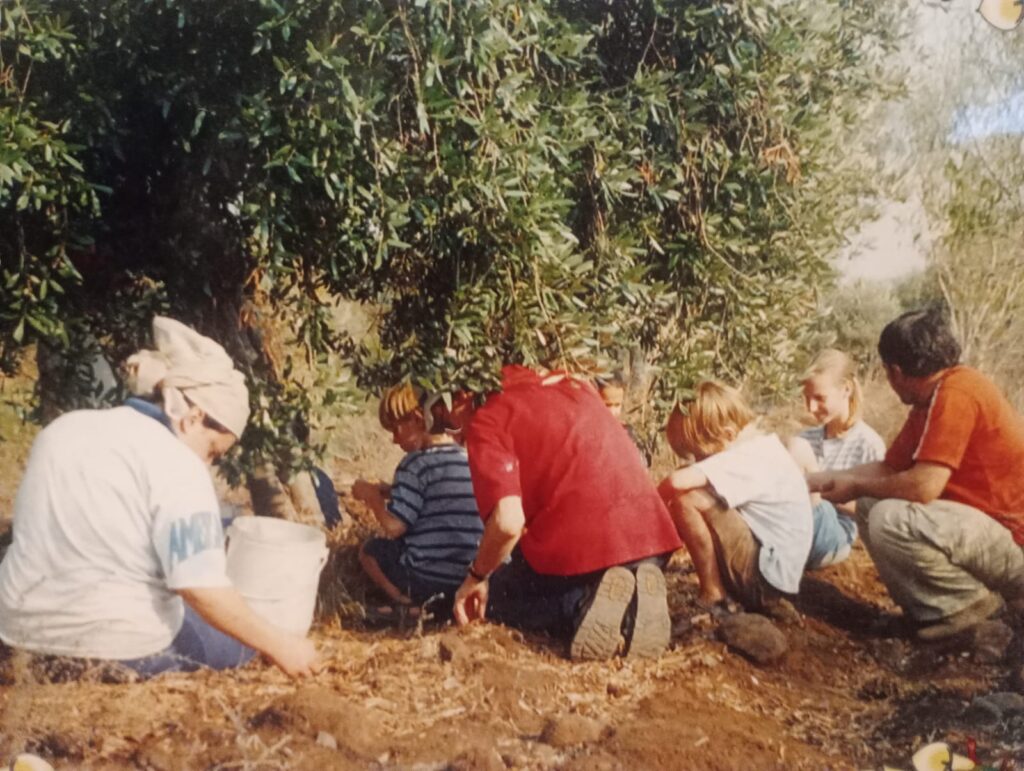
M.E.E: I pondered for a long time what to do after finishing secondary school. My parents encouraged me to take a gap year, but said they would not be able to finance it, so I had to find an opportunity that would not require funds. A girl from church told me about her experiences in the L’Arche community (L’Arche – the “Ark” communities are an international organization in whose communities people with and without intellectual and physical disabilities live together, offering support, fellowship and opportunities for a full life, based on respect, compassion and love), and I applied there, living for a year together with people with intellectual disabilities. And it all worked out. I gained invaluable experience, including improving my knowledge of English. I needed to be far away from my family, because inwardly I felt very lost. On the outside I had learned to fit in, but inwardly it had not yet happened.
My family was guided by such strong convictions and values that it was hard for me to develop my own thoughts and to understand what my values are. They lived in accordance with their faith, and it was so powerful that I needed to find my own way. To do that, I had to go away – the farther, the better.
So you became a kind of “lost daughter”, who had to go away in order to return changed?
M.E.E: (laughs) Yes, in a way that really was so. I remember once telling my family that I would stay a while longer and not come home. And they answered firmly: “No! One year! We understand you, but now you have to come back. Now we can pay for your studies, but in five years that will no longer be possible. You will start studying and then figure out what you want to do with your life.” I returned home and, with great difficulty, made the decision to study psychology.
Did you have an inkling that studying psychology would be connected with your previous life experiences? After all, Rwandan and other refugees lived with you – did you sense that the refugee question would once again become relevant in your life?
M.E.E: Yes, Syrian refugees also lived with us. In 2011, when the war began, we started taking in Syrians – one after another. But, to answer the question, no, at first I did not know that studying psychology and refugees would be connected. During my studies I was busy with various responsibilities and thought more about getting my diploma than about becoming a psychologist.
During my studies I had the opportunity to go on an internship to Kinshasa, Congo. I also devoted a lot of time to volunteer work with refugees – for several weekends I went to work in Calais, France. Before my experience in Calais I dreamed of traveling around Latin America, but after the second weekend in France I realized: “Yes, I would very much like to spend time in Latin America, but that is not my calling. Instead, I will continue to study Arabic.” In Calais I met many Syrians.
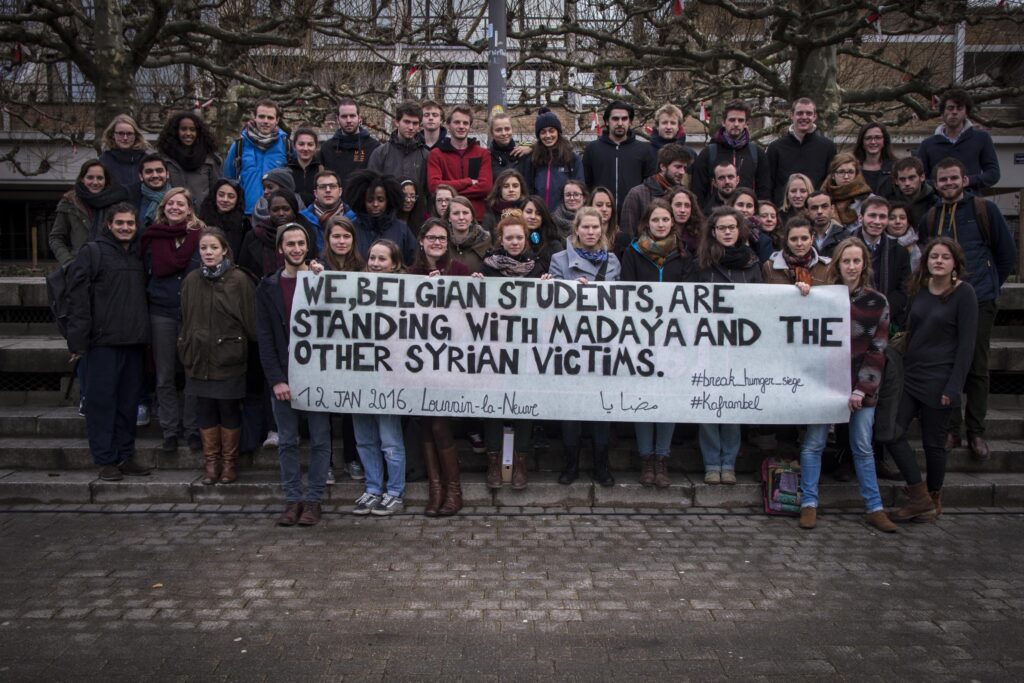
What did you witness in Calais? Did you see that you could support and be alongside refugees?
M.E.E: They were so glad to meet someone who knew their culture and religion, even though at that time I did not yet know all that much about Islam. But in these encounters I decided that I had to go back to the Middle East and get to know Islam – both as a religion and as a culture.
Shortly after my university graduation I bought a one-way ticket to Jordan. There was no plan – only for the first month was it clear that I would be able to take part through WWOOFing projects (World Wide Opportunities on Organic Farms). One farm was, however, able to employ me for three months, longer than I had hoped, but there were no other plans or opportunities after that.
After the farm work I went to a Palestinian camp, which opened my eyes to a completely different reality that I had not known before. There I got to know a young man who became a very close friend, and right now his brother is an asylum seeker in Belgium and partly lives in my parents’ house. We became friends and got along well.
One Friday he said to me: “Come, let’s eat together with my parents!” After the Friday prayers (just as in Christianity the holy day is Sunday, in Judaism it is Friday evening to Saturday evening, so in Islam it is Friday) I went to their house to enjoy a meal together. My friend’s mother asked about my further plans and what I would do now that winter was approaching and on the farms there was an empty period. I said I did not know. The mother said: “Come, live with us!”
I packed my things into a backpack and settled in to live in a Muslim family next to a Palestinian refugee camp. I intensively studied Arabic and learned to converse in it. The family’s mother and my friend spoke a little English. When I began living in their house, it was explained to me that, living under their roof, I would have to follow the same rules that applied to the family’s daughters. That meant I could not freely leave the house and go wherever I wanted, because the neighbors might start to gossip. Likewise, I could not be on the roof of the house. I was not allowed to meet the neighbors’ boys. I spent a lot of time in the kitchen and, on the whole, sat a great deal. I had no life outside the house.
I had three brothers and two sisters. The girls spent most of their time at home. Sometimes we could go out, but if the father of the family said that today we would not go, then we had to stay home. That is how I lived for a month and a half.
We went to visit some family friends, and it was too much for me. I felt I would go out of my mind. The father brought us all there, went off himself, and now we were under the authority of other men, who did not let me leave the house for three whole days. It was too much for me. I realized I had to look for another plan.
Yet it was very valuable to experience all of it – all that everyday life, the neighbors, the poverty, the hardships. This was a Palestinian family from Gaza. The family’s grandparents moved from Gaza in 1968, which meant that they could no longer obtain Jordanian passports. The younger generations – those already born in Jordan – have Palestinian nationality, but they have no right of return; they cannot enter Palestine. The houses and neighborhoods are very poor. They live on land areas rented from the United Nations, because they have no right to buy land of their own. On the whole, future prospects are very narrow.
Every six months I had to leave Jordan to renew my tourist visa. I went to Palestine and then by ship to Egypt. In Amman I found a job in social entrepreneurship and could earn enough to buy myself food, which gave me the opportunity to continue these experiences in the Middle East. I met other foreigners. It turned out that I had completely transformed – I had adopted the local customs and cultural codes! People wanted to shake hands with me, to embrace me, but I drew aside and said: “No, no, I do not want your handshake!” In the camp they gave me a long robe, a coat, which I wore every day (laughs), – and, without noticing it, I myself had become a Palestinian. I only began to realize it after others pointed it out.
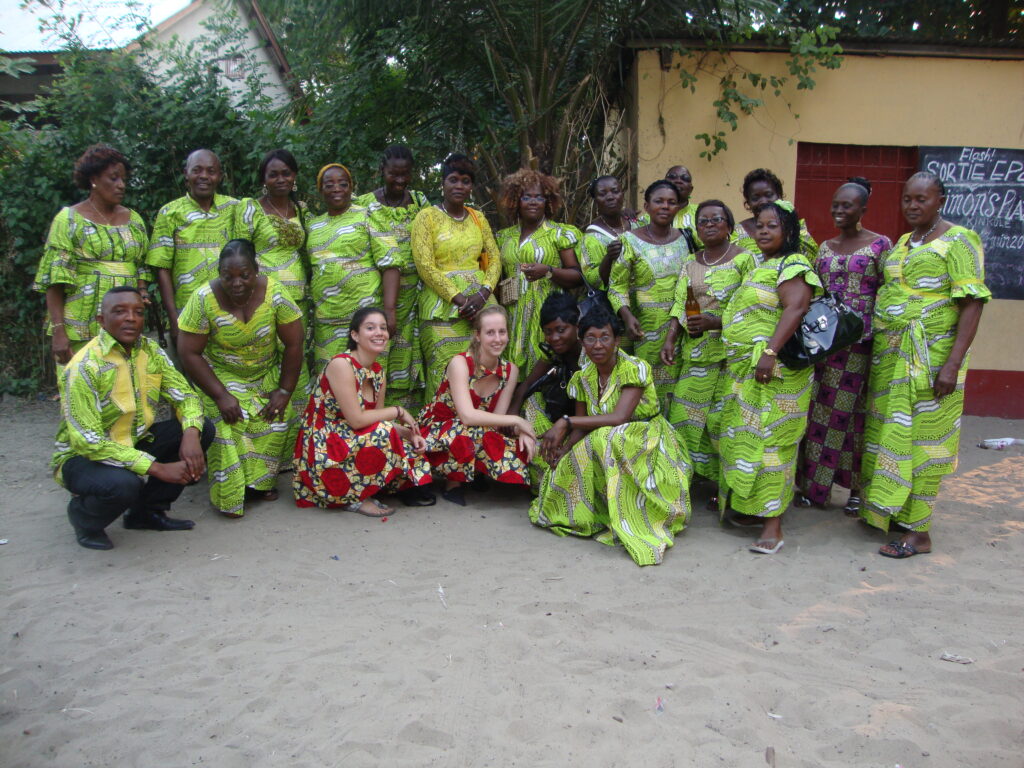
For a while I worked with “Innovation Aid”, an American organization that worked in the Zaatari camp – a Syrian refugee camp. There I got to know a Syrian family that lived outside the camp, and I often spent the night at their place on the floor. My dream came true! In all, I lived in Jordan for two years.
Then another stage began. I started raising my daughter and tried to understand who I now was and where I was going. These questions accompanied me for a year and a half. Then Covid began, and we were in isolation, but for me it was a much-needed time. Through these restrictions I regained energy and the ability to move forward.
I started working as a psychologist in a refugee center that was desperately looking for someone to take on the job. Gradually, beginning in 2020, I started to build my own psychology practice.
At that time was it already clear to you that you would work with refugees?
M.E.E: Yes, completely clear! In my daily work I use a lot of Arabic and English. In 2020 most of the refugees were from Syria and Palestine, but now, because of the events in Gaza, there are even more of them.
How do they get out of Gaza?
M.E.E: Those who are now in refugee centers in Belgium managed to get out before the war started. Others get out thanks to the family reunification program.
It seems that Europe is growing weary of the influx of refugees, and the voice saying that we have taken in too many is becoming ever louder. Are we coping well enough with those who have become part of our society? What are your reflections as a psychologist?
M.E.E: It is a very difficult question. I am ashamed of how we receive refugees, of the conditions that prevail in refugee centers in Belgium. The situation is critical. I have to think about how I myself was received and how society treats refugees. The asylum process takes an extremely long time, and the culture shock is very complex.
What situations do you most often encounter?
M.E.E: Psychologically they are all traumatized. If the trauma is not connected with events in their homeland, then it arises already on the way to Europe. And that is terrible. We all need a sense of safety and stability.
Among the difficult stories, are there also some joyful ones? And how do you feel – is your work able to bring positive, life-changing transformations?
M.E.E: Yes, I have the feeling that what I do is important. Starting with the fact that refugees are given the opportunity to be heard, understood and valued as fellow human beings. When they end up in refugee centers, they become just numbers – nothing more. The asylum process is not about who they are or what they have been through. It is a purely legal and political procedure. Their experiences are not acknowledged and are often even denied.
But many people are incredibly brave. They want a better life, stability. They learn the language. For the most part they are very diligent and hardworking people, if only they are given the opportunity to work.
The waiting is extremely hard. You wait and are in uncertainty, because there is no clarity or assurance whether this country will accept you. And so you wait for about two years. Some say: “I will use this time productively.” Others simply give up, and it becomes a “frozen time” – perhaps even a time of addiction, and to get out of it is extremely hard.
Does faith give them strength?
M.E.E: Yes, and I often talk about that. I try to help find a community of faith. At this stage of life, when everything is paralyzed in waiting and practically nothing can be done, faith is of enormous importance. It helps to fight insomnia, the nightmares of the past and the pain of losing one’s home.
And if faith has been lost?
M.E.E: That happens rarely. Usually faith is something they hold on to very tightly. It helps to find inner resources. They come from environments where life has already forced them to ask very serious questions. Just imagine – what is it like to be born in Gaza? If they did not have the hope that on the Great Day of Judgment people will answer for what they have done or failed to do, – I do not know how else they would be able to go on living.
Is it more connected with punishment for “bad people” or with just recompense for the victims?
M.E.E: From my experience I can say that I much more often hear about the just judgment of evil people. And that provides a certain comfort and relief.
Does it manifest as aggression toward the evildoer or as hope for justice?
M.E.E: Definitely – hope. Most live with hope and a longing for a happy life.
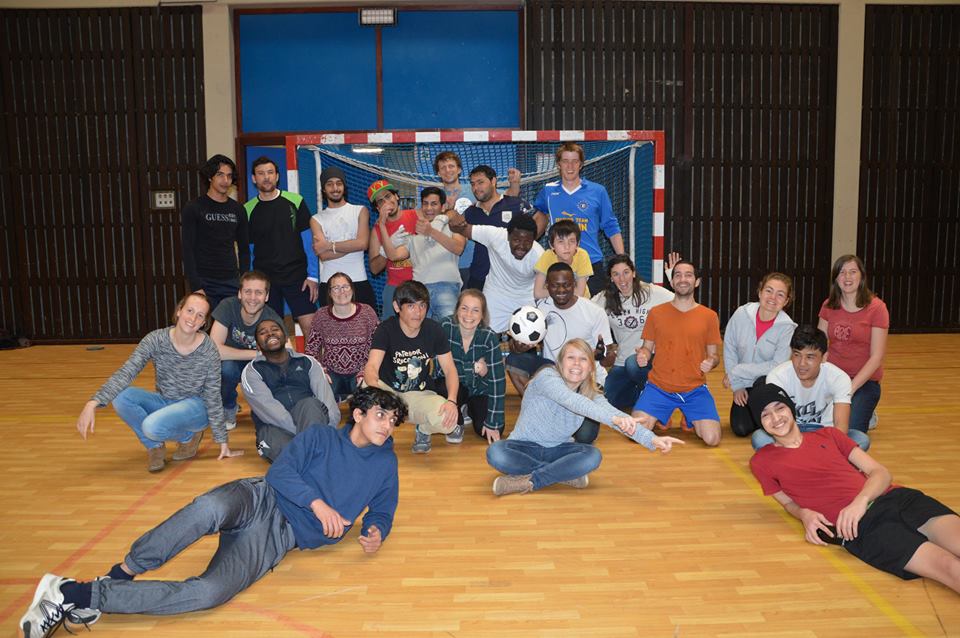
Thinking about your biological family and the wider “adopted” family that you have found in your wanderings, what values have shaped you and what currently gives you strength to continue the work you have begun? You too are a woman with a sense of mission, like your parents, even though you have chosen a different path.
M.E.E: The faith I once had is now different. My highest value is every single person. I feel very happy and grateful that I can listen to countless life stories and be part of this intimacy – to enter the world of people’s thoughts. I am humble before this experience – that I can give my attention, help to build up another person’s self-worth. My fundamental value is love.
What about us – those who are on the outside, who have no real understanding of what it means to be a refugee? How should we live in these times full of unrest and uncertainty?
M.E.E: The most essential thing is to go to the other person. We have to take the first steps to receive the stranger. As members of the local society we have a duty to listen and to ask.
I am convinced that isolating refugees – keeping them apart from the rest of society – is a bad decision for the future. We should do the opposite. If we do not know each other, fear reigns between us. And if we are afraid, we start to imagine all sorts of things. That happens on both sides. The more afraid we are, the more we wall ourselves off. We think that this is how we protect ourselves, but that is not the truth.
The solution is to get to know the “other”?
M.E.E: It is the only way. It seems to me that we are fortunate. We have so much of everything. It is hard for me to grasp these different life experiences and the enormous gulf between us. And yet we are afraid, and we believe that we are the owners of everything. But we can be grateful – we have democracy, security, prosperity. Meanwhile Africa suffers… I do not want to compare, but life in the Middle East is one thing, whereas in Africa…
When I started working, it was very hard for me. I was deeply traumatized by the inhumanity of people. Many of my friends who work in the social field have left it, because it is too hard. But I believe that it is my calling, and I cannot look away and pretend that all of this does not exist, even if I am unable to influence anything.
The longer I work in this field, the better I understand that, in order to help others, we must first take care of ourselves and those around us. Self-care is a good example for others. At first I felt guilty about my privileges, but now this voice is quieter. When we want to act, the feeling that guides us should not be guilt.
From what feeling-place should one serve?
M.E.E: It has to come from the heart. From the fact that every single person is noticed and placed at the center.
Can we return to fear – not only individual fear, but also collective fear, which arises from the war in Ukraine, in Gaza and other huge crises in the world? How does one work with such fear?
M.E.E: Fear has to be given its place. All emotions are valid and useful, fear too, and it is important to acknowledge that. Fear protects us from danger, but sometimes it is completely unnecessary. We can be afraid of the dark, even though there is nothing to be afraid of there – no real danger. We have to understand this, be able to control fear and use it correctly.
Is it enough that the individual understands this? Perhaps we need programs that would help work with fear that is able to destroy our lives?
Essentially it all begins with education. I have noticed that in many places schooling begins with fear. Fear means control. For parents it is easier that way – if a child is afraid of me, they obey. But in this way we help to form adults who are unable to use fear to their own benefit. Quite the opposite – they begin to act on the basis of their fears and bring authoritarianism to life.
What is the opposite of fear? What should we cultivate?
M.E.E: We need joy. But that does not mean that fear has to be erased. Working with patients, I see how trauma disrupts emotional regulation – fear grows and grows, and a person can no longer distinguish the rational from the irrational. I would say that fear has no real opposite, because all emotions are needed. They are tools that are at our disposal – one just has to learn to use them correctly. Fear is one of these tools, and we should not let others use it against us.
We have to learn to draw near to the other. We also have to be able to acknowledge that happiness and joy are good, because they help us to better understand what is truly important and what the heart cares about. But sorrow is just as significant. We value joy and seek happiness, but that is not everything. Perhaps it is advantageous in capitalism, but that is already another conversation.
Are you saying that we should not set the goal of becoming happy, but rather accept the diversity of emotions and experiences?
M.E.E: Yes, exactly! When I am sad and share it, people try to cheer me up, but in fact nothing extraordinary has happened – it is very important to feel sorrow. Joy will come, and when it comes, it will be all the more meaningful. Right now I may be sad or angry, and that is normal.
With anger too – we are taught to restrain it, even though in men it is often tolerated. For example, an angry father is perceived as something acceptable. But we must not forget that anger can foster positive change. Women’s right to vote came from anger.
That reminds me of something I read somewhere, that anger is the seed of compassion.
M.E.E: That is very beautifully put. In my work I try to help clients build a connection with their anger and turn it into action – for example, into political activism. I cannot agree with the idea that anger should be pushed away simply because it can lead to destructive behavior. We have to learn to regulate anger. It is valuable. We do not have to be joyful all the time, at all costs.
I look and observe how very resilient we as human beings are, how much energy and inner resources we have. Perhaps we have lost this awareness, or else temptations and various distractions keep us from recognizing this truth.
You come from a strong religious and community-oriented environment and could have chosen to leave it all behind in order to live your own life, for yourself. Yet it sounds as if you have chosen to keep these deeply rooted values, while at the same time forging your own path, remaining faithful to who you are.
M.E.E: Yes, and that I cannot explain in any way. I look at my brothers, and they no longer have this connection. Sometimes I too wish that I could simply live for myself, because it would be much simpler. When you encounter another’s pain, it is hard. But in the end – I would not be able to live any other way at all.
Is fear our greatest challenge?
M.E.E: We do not know how to carry unpleasant emotions, and that is something to be worked on. Anger, sorrow and fear are basic emotions, but we are taught that sorrow must not be expressed in public. It is similar with anger – they are not socially accepted feelings.
Fear is the main instrument used by the political right wing, although I think nothing is so simple. We live in times of great change – life is becoming more complex, the climate is changing, and we crave simple answers. The right wing offers such seemingly easy solutions, and we feel a strong pull to follow them. But “simple” is not the right answer. Everything is interconnected, and we have to understand that in life there are no simple solutions.
It is important that we do not leave all the responsibility on the shoulders of a few individuals, because we are communities. It is also a political question – it is not one leader who is responsible for everything, but rather society as a whole. We are social beings, we have to build relationships with one another, because together we are stronger. Yet nowadays we are becoming more and more isolated. We have to remember that we belong to one another.
In pastoral work, as a result of the reflections of the priest and psychologist Henri Nouwen, there is the concept of the “wounded healer.” Jesus Christ is the prototype of this healer – he allowed himself to be wounded, broken and crucified, and through this self-giving became a healer. From fragility, as from any other place, something new can grow. Nouwen would say that the minister, the therapist, or anyone who serves others, must first encounter their own fragility and humanity – only then are they truly able to encounter the other.
M.E.E: In one way or another we are all wounded, even those who come from seemingly perfect families and good circumstances. If we want to help others, we ourselves must be in a process of healing. We cannot support others if we ourselves are not responsibly moving along our own path of growth. Yet this does not mean that everyone has to experience suffering in order to be able to help those who suffer.
Above all we have to preserve humility. We are not saviors, and others are not victims – such thinking only feeds our ego. As a psychologist I see success when we work together. Sometimes, as helpers, we have to take on the role of a leader in order to support the other, but it is essential that in this process there are moments when complete equality prevails. The person who seeks help is the expert on their own experience, suffering, thoughts, faith and goals.
We have to be humble. If we always position ourselves as superior, we push others down. True help is when a person becomes so strong that they no longer need our support. To achieve this, we have to be able to connect with our own fragility and to encounter the other with humility.
Some of Maïté’s recommendations, connected with the topics that came up during the conversation:
The community in which Maïté grew up: www.penuel.be
Tobie Nathan (Joyce Zonana, trans.) the novel “A Land Like You”, which was nominated for the prestigious Goncourt Prize in 2015. A Land Like You is part legendary tale, part realistic history, based on the ethno-psychiatrist Tobie Nathan’s personal Jewish-Egyptian life-story heritage and his deep knowledge of the customs and beliefs of the peoples of North Africa.
The song Al Amal (Hope) by the well-known Egyptian singer Oum Kalthoum, which is well known to all generations and often heard in the Middle East.
The TV series (Netflix) Another Self, which is a journey through intergenerational therapy in the context of Turkish culture.
(conversation and its transcription: Arta Skuja, LLSTA)