

At the Lutheran World Federation Assembly in 2017, Dr. Denis Mukwege gave an emotional speech, interwoven with personal experience, about violence against women, which sadly remains a current issue. Dr. Mukwege is a human rights activist, gynecologist, and pastor from the Democratic Republic of the Congo, who helps women who have suffered sexual violence. We invite you to read excerpts from the speech.
“I trained in pediatrics in order to play a part in reducing infant mortality. In my first year of practice, I was shocked to discover the very high mortality rates among mothers. That is why I changed my specialty to gynecology — my goal was to fight this terrible problem. After studying in France, I returned to the Congo, and a few years later, in 1996, war broke out there.
This first war in the Democratic Republic of the Congo gave rise to a new pathology – especially violent rape. (..) What were initially regarded as isolated incidents turned out, after a few months, to be a planned, systematic campaign of rape. The women of entire villages were raped in the course of a single night. Tribal leaders and church leaders were raped publicly. Elderly people and children were raped
My initial response to this barbarism was to care physically and psychologically for the women who had been victims of sexual violence. But when I had to operate on children born as a result of rape and who were themselves also victims of rape, I realized that my only choice was to speak about it publicly and to condemn this unimaginable barbarism. That is why I am here with you this morning. That is why I have chosen not to be in the operating room — in order to tell the world about the unimaginable suffering of our fellow human beings — our equals, our sisters, mothers, and daughters. (…)
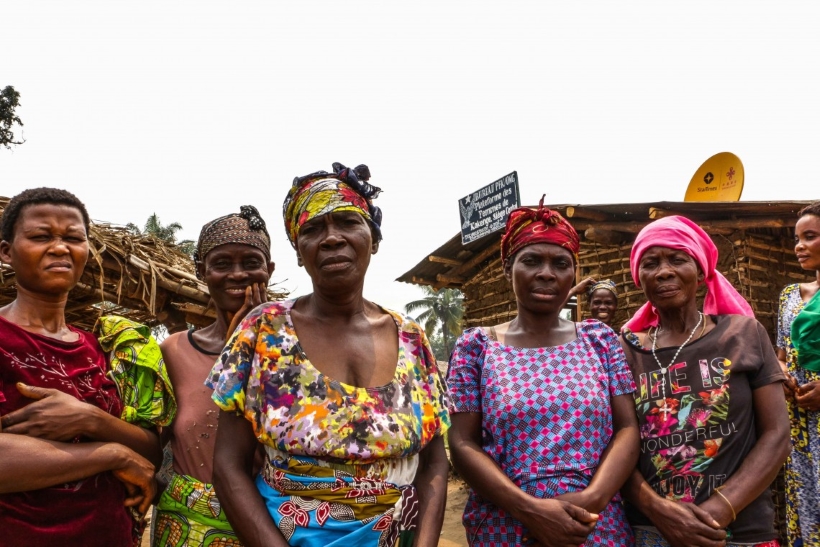
You are needed by women who suffer sexual violence all over the world! Whether it be in Yemen, Iraq, Syria, or Burundi, the church must be a voice for those who have no voice of their own — a voice for those women who are essential to the survival of humanity.
As proclaimers of the Word, you must not ignore the influence of your preaching and catechism on the members of your congregations. The root of sexual violence is to be sought in church teachings that do not respect women. Misogyny, the conviction of a woman’s inferior role, is not unique to Africa. Certain ideologies have reduced woman to her reproductive functions and cast her as one who must serve men. Between misogyny — that is, teaching that despises women — and the sexual violence to which women are subjected both in times of peace and in times of war, there is a clear connection.
What are we to say about the rights of women in the world and in the church? We cannot ignore the great debate about the place of women in society and in the priesthood. It is a debate that the church does not take up with enthusiasm. But when the Lutheran church respects women in the priesthood, it honors Luther. Today his struggle for the rights of women still meets great resistance to the significant role of women in the church. This expresses men’s disrespect and inhumane attitude toward women.
When he said, “As many Christians, so many priests,” Luther was fighting for women to be heard.
The oppression of women and the inequality between men and women that still exists is a stain of shame on all of humanity. How can we keep silent about this deformity in the presence of Eve, the mother of humanity? Lutheran theology, especially regarding the place of women in society, is a message of hope to all women who are victims of emotional, physical, or sexual violence. We, the heirs of Martin Luther, have a duty in God’s name to drive out the demons of misogyny that enslave the world, so that the victims of men’s barbarism may experience the Kingdom of God in their lives. (…)
We are not here to rewrite the Bible so that it fits the modern world, but rather to believe in the trustworthiness of the Gospel in the twenty-first century and to administer grace, making the church a beacon of light in the darkness of the world, fighting for justice, truth, rights, freedom — in short, for the dignity of men and women.
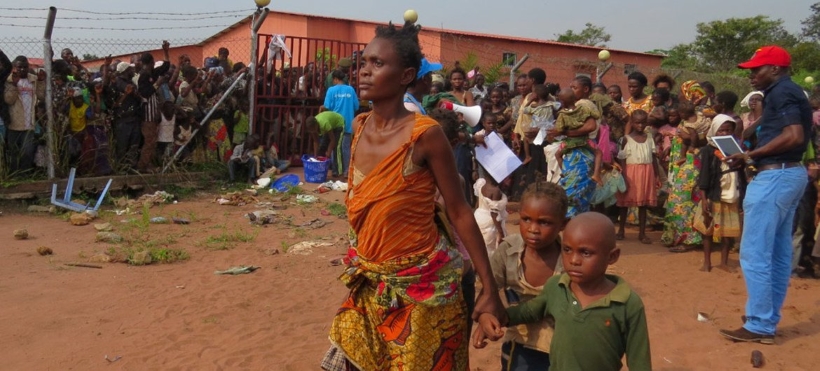
The theme of the assembly is “liberated by God’s grace”, because, since we are liberated by God’s grace, we must continue the work of liberation for the good of others. If we do not do this, we trample on God’s grace. Despite some oases of peace, many territories are subjected to various torments. How can we celebrate the grace of our liberation in Christ when, all around us, men and women are being mutilated, imprisoned, subjected to sexual slavery?
Therefore, misogynistic theologies that justify violence against women must be corrected and replaced with a theology that respects women. The church’s mission on earth is prophetic — it must expose and condemn evil. It is our duty to act at all levels of society in order to achieve legislative progress and to create a society that rehabilitates women and helps them flourish. (…)
I would like to be full of optimism about the future of the world in which we live. But how can I rejoice in the face of indifference? I would like to rejoice at the growing number of Protestants in my country and in the world, but I cannot! How can I rejoice at the increase in the number of “believers” if their number is higher than the level of love and tolerance among people?
How can I rejoice when every week I have to confront the violent rape of children, girls, mothers, and grandmothers? How can I rejoice when I know for certain that the makers of economic and political decisions deliberately turn a blind eye to the horrors that women must endure, in order to protect the interests of international corporations? How can I rejoice? (…)
You know better than I do that the Protestant Reformation was an event that ushered in modernity. In truth, before Luther, all those who condemned the abuses of the church were killed. Luther stood against those church practices that were contrary to the Word, and he managed to survive.
Luther knew that the condemnation he expressed toward the church could cost him his life. That is why he composed his famous hymn with the words:
A mighty fortress is our God,
A trusty shield and weapon..
Though the devils of the world should act
And seek to destroy us,
We do not take it to heart,
For they cannot overpower us (…)
But what is the situation today? How has the Protestant church used its freedom of speech? Where is the church when the rights of the weak are mocked? Where is the church? What does the church say about the recent tragedies in Iraq, Syria, and the Congo? (…)
The church should be in every place where people suffer. At times it must leave the church buildings, cathedrals, and chapels in order to be together with the homeless, refugees, illegal immigrants, and all the fellow human beings who are less fortunate. When the church grasps the breadth of its calling, it can move mountains. (…)
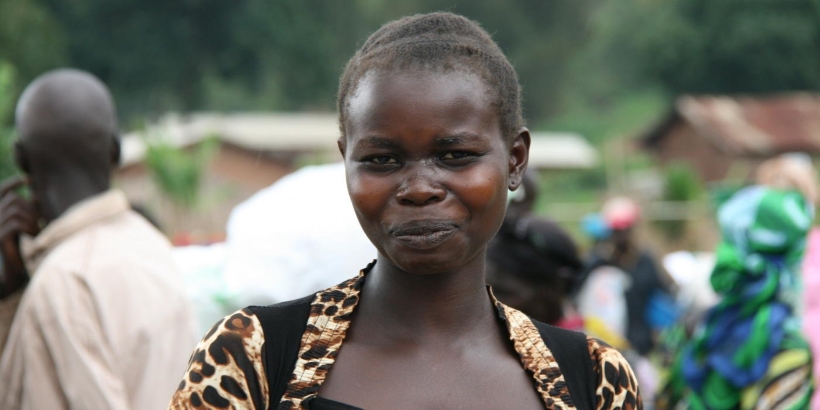
Unfortunately, the church has often turned a blind eye to abuses out of fear of retaliation or out of ingratiating itself with power. In this way we lose our calling, we betray God and we betray God’s people. The church of today and tomorrow has many challenges — climate change, terrorism, migration, refugees, sexual violence, and corruption-ridden governments — especially in Africa — that create and change laws in order to protect their own interests at the expense of the people.
If we are of Christ, we have no choice but to stand alongside the weak, the wounded, refugees, and women who suffer discrimination. If we are of Christ, we must raise our voice to condemn evil.
God has given the church the gifts of speech, so that it may be the voice of those who cannot speak, so that it may set free those who are bound and always look toward the Kingdom of God. If on this path we encounter resistance and persecution, we must not give up. We must continue to fight, in order to free the oppressed, fulfill the promises of the Kingdom, and make Luther’s words our own:
And though they take our homes,
Life, honor, children, spouse,
Their gain will be small,
For these things will pass away,
But God’s kingdom will be everlasting.“
Read the full text of Dr. Mukwege’s address here.