
20. 12. 2019.
Phoenix, USA / Geneva
Voices from the Communion: Bishop Deborah Hutterer, ELCA
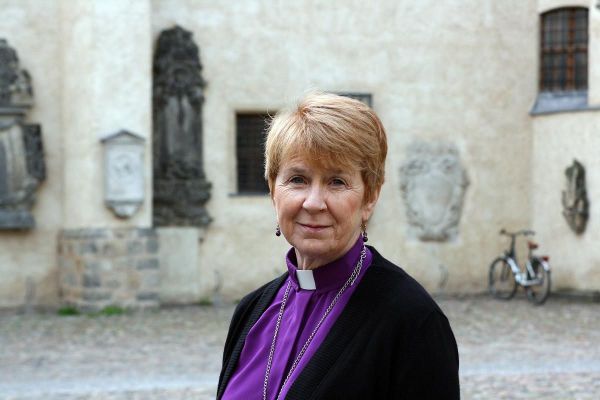
Rev. Deborah Hutterer was elected bishop of the Grand Canyon Synod in the USA in September 2018. This synod of the Evangelical Lutheran Church in America (ELCA) covers regions in Nevada, Utah and Arizona, along the Mexican border, where the church helps migrants. In an interview with Lutheran World Information she speaks about ministry, countering populist rhetoric and openness to change.
How do you experience migration across borders?
Before I became a bishop, I worked at Lutheran Social Services (LSS). The government asked LSS to help with reuniting migrant families whose members had been separated and detained at the border. When this became public knowledge, the government was forced by a court ruling to bring them back together.
When the people arrived, they had been reunited with their children only a few hours or minutes earlier. We tried to create a safe and welcoming environment, and we invited Spanish-speaking pastors to be available to them. I remember a mother who had just met her child. The mother would not let the child go, but while she was talking with the pastor, the child came up from behind, tugged the pastor’s shirt and asked: Pastor, where have you been?
Isn’t that a question for the church: Where were we?
As bishop of the Grand Canyon Synod, how have you continued this ministry?
When ICE (Immigration and Customs Enforcement) left thousands of migrants on the streets of Phoenix this past summer, we opened the churches at night so that they would have a safe place to sleep, eat and transportation to travel to relatives in the USA.
Now the law has changed – it is no longer possible to enter the USA if a person has come through another country. If you come from El Salvador, Honduras or Guatemala, you have to apply for immigration in Mexico.
We have a joint Episcopal and Lutheran ministry in the border zone in Nogales, Mexico, providing shelter to people who are waiting for an interview. The place takes in about 70 people, who stay 5-6 weeks. We make sure that they are treated humanely and that they are safe. Some people are fleeing drug cartels and the sex trafficking business. Everyone has a different story, but we know that some of these people are seeking refuge to escape violence.
The problem is that we are trying to change the system, but these people are standing right in front of us. What has God given us to care for the neighbor who is right in front of us?
How is this work received in the congregations?
I think personal experience helps people see that migrants are not so different from us. Sometimes politicians say that people who seek refuge or migrate are terrorists or drug dealers. These encounters help us see one another as human beings and understand the humanitarian needs.
We are planning to bring people across the border in order to challenge stereotypes and give them well-founded information. We hope that they will carry these stories back to their congregations.
How do you finance this ministry?
Lutheran congregations in Nevada and Arizona have gathered money, clothes and shoes, even toys, so that we can help people await their immigration interviews with greater comfort. People usually arrive only with the clothes on their backs. The money is used to pay rent on the Mexican side and to buy food that is needed. Within the synod, congregations and individuals who feel a connection to this ministry provide funds and donations that go directly to helping.
How do populism and hate speech affect your church?
This is a very difficult time. Pastors tell me that whatever they say can be interpreted as a political statement, and then people become hostile. When the ELCA made the decision to become a sanctuary denomination, there were people who left our church. I hope and pray that there will also be people who come because the church stands up for these things.
We also need to bring in a sense of humility, to acknowledge that we only see part of a picture that is complex and many-layered. Only by talking with one another can we see this picture more fully. I try to stick to the facts and to look for opportunities to learn from one another, and to understand that it is normal to hold different views, as long as it is done with respect.
How does belonging to the LWF communion affect your work?
Taking part in the retreat for newly elected leaders was a special privilege. Even though I differ greatly from my colleagues in India, Korea or Ghana, we have a great deal in common. The ELCA is a wealthy church, but we have the same problems as churches with fewer resources. Understanding that together we are church, we will broaden our perspective on the global church.
Likewise, I hope that meeting with colleagues who doubt the ordination of women might make them think that women pastors are also a gift to the church. Another thing I find helpful is the opportunity to raise questions that give us the chance to be the body of Christ: gender justice, climate justice, care for creation, immigration, refugees.
Many church leaders spoke about attracting young people. What do you think about that?
In the broadest sense, time is what people lack. You could choose so many other things. How do you connect church on Sunday with everyday life? Young people are looking for a real-life connection between the gospel and the world. That is why the discussions about the priesthood of all believers and experiencing faith were valuable.
Too often we invite people and want them to be like us. We will change if from now on we also work with people who are not over 70 years old and white. It would be valuable for the church to remember this.
– Bishop Deborah Hutterer, ELCA Grand Canyon Synod
It is also important to honestly acknowledge reality. To say “everyone is welcome” means that we are ready to change when you knock on our door. Too often we invite people and want them to be like us. We will change if from now on we also work with people who are not over 70 years old and white. It would be valuable for the church to remember this.
What does it mean to you to be church today?
Now that is a simple question! Part of it is proclamation; we have to bear witness to Jesus in word and deed. There are churches that do a great deal of social ministry, but sometimes forget to say that we do it because God loves us and we love our neighbor. The Book of Acts is one of my favorite stories, because the first Christian churches told of why they did what they did.
Sometimes being church means letting go of the old and trusting that God will create something new. That is frightening, because we only know what we know, and it requires trust in God. Part of what it is to be church is to see and to show the new things that God is doing.
Source: The Lutheran World Federation news
Photo: LWF/A.Weyermülle